
Freight Broker vs. Carrier: Who Should You Book?
What each really does, the failure modes of both, how to verify authority and insurance, and what dual authority changes.
Book a carrier when your freight repeats on lanes that carrier already runs — you get its own trucks, its own drivers, and one party accountable end to end. Book a broker when your lanes vary, volumes spike, or the destination sits outside anyone's regular network, and you need capacity found rather than owned. The failure modes are as distinct as the services.
Both types have earned their bad reputations through their bad versions: brokers through double-brokered loads and vanishing accountability, carriers through "we don't run that lane" and take-it-or-leave-it scheduling. Verifying which version you're dealing with takes about five minutes, and this is how.
What each one actually is
A motor carrier owns or leases trucks and employs or contracts the drivers. It holds motor carrier operating authority from the FMCSA — the MC number you can look up — and it is the party physically responsible for your freight while it moves. When a carrier quotes you, it's quoting its own equipment and its own people.
A freight broker moves freight it doesn't haul. It holds separate broker authority, and its product is the match: your shipment on one side, a vetted carrier with the right truck in the right place on the other. A broker never touches the pallet; it arranges, prices, tracks, and stands between you and the asset owner.
These are legally distinct authorities. One company can hold both — more on that below — but every load moves under exactly one of them, and which one it is determines who answers when something goes wrong.
What a broker adds — and its failure mode
The honest case for brokers is capacity math. No single carrier's trucks cover every lane, every trailer type, and every pickup window. A broker with a real carrier network can cover the odd lanes: the once-a-year shipment to Montana, the overflow week when your usual carrier is full, the reefer load your dry-van carrier can't take. For a shipper with freight going many directions, one broker relationship can replace a spreadsheet of carrier contacts.
The failure mode is thin accountability. The worst version looks like this: you tender to a broker, the broker posts it to a load board, a carrier accepts — and then re-brokers it to someone cheaper, sometimes without authority or adequate insurance. That's double-brokering, it's against the rules, and it's the root of most freight horror stories: the truck that never showed, the freight held for ransom over a payment dispute two layers away from you, the claim nobody's insurer will own. A broker who can't tell you the name and MC number of the carrier actually hauling your load is a broker you can't audit.
What an asset carrier adds — and its limit
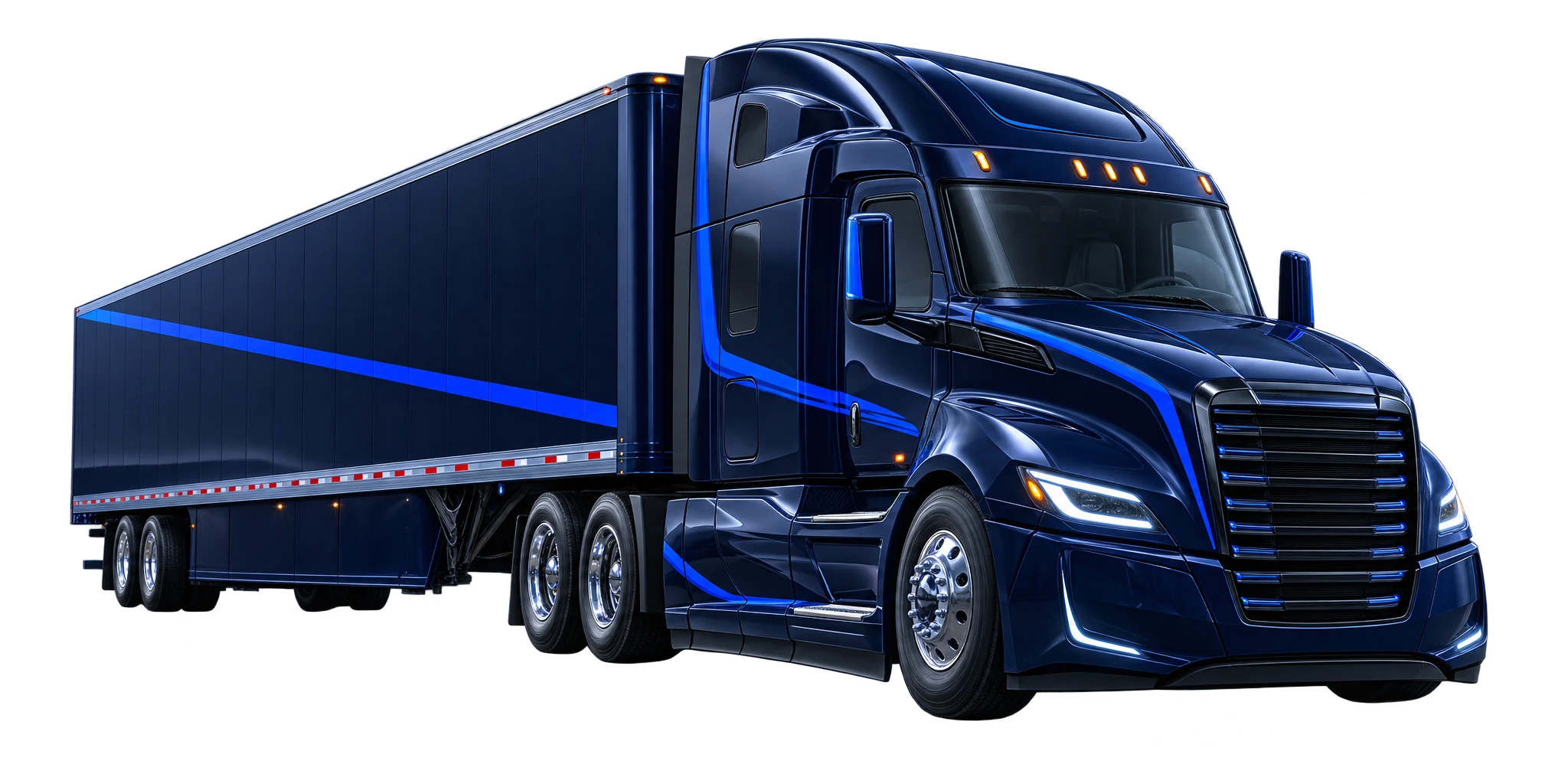
Booking direct with a carrier buys control. The dispatcher you call employs the driver who shows up. Transit commitments come from the people who own the schedule. If the freight is damaged, there's one insurance policy and one throat to choke — no chain of custody dispute about whose trailer it was in when the forklift hit it. For freight that repeats — the weekly restock run, the daily parts shuttle — a direct carrier relationship usually beats a brokered one on both price and consistency, because the carrier can plan around your volume.
The limit is geography and equipment. A carrier sells you its lanes. When your shipment leaves them — different region, different trailer type, a surge week — a pure asset carrier has nothing to offer, and you're back to shopping. Shippers who book only direct end up managing a roster of carriers, one per lane, each with its own paperwork, portal, and quirks.
How to verify anyone before tendering a load
Five minutes of checking prevents most of the disasters the forums describe:
- Look up the authority. The FMCSA's SAFER system and licensing database are public. Search the MC or DOT number and confirm the authority type (broker, carrier, or both) is active — not pending, not revoked.
- Match the name on the truck to the name on the paperwork. If you booked Carrier A and Carrier B's truck arrives, stop and call. That mismatch is what double-brokering looks like at the dock.
- Get a certificate of insurance. A COI naming the actual hauling carrier, with cargo coverage that exceeds your shipment's value, issued by the insurer — not a screenshot. Brokers should also show their surety bond.
- Check operating history. Authority granted last month plus a rate far below the field is a pattern, not a coincidence.
- Ask who hauls it. A legitimate broker answers with a carrier name and MC number. Evasion is your answer.
Why dual-authority operations exist
Plenty of real-world freight doesn't split cleanly into "our lane" and "not our lane," which is why operations holding both authorities exist: run trucks where density supports them, broker where it doesn't, and keep one accountable party either way. That's the structure we chose at DirectXpress — dual broker and motor carrier authority. Inside Southern California, your freight rides our own 26–53 ft box and straight trucks: same-day LA County runs, heavy final-mile, store restock and dedicated routes. Beyond our trucks, the brokerage side books your nationwide LTL through carriers we vet the same way we'd tell you to — and the tracking, the paperwork, and the person who answers the phone stay the same.
What dual authority changes for the shipper is simple: the "broker vs. carrier" decision stops being your problem per-shipment. You describe the freight; the routing decision — own truck or vetted partner — happens on our side, and the accountability doesn't move.

Questions to ask before your first load
Whoever you're evaluating — broker, carrier, or both — these sort the field quickly:
- "Who is physically hauling this, and what's their MC number?" The only acceptable answer is a name you can look up.
- "What happens if the freight is damaged?" You want a claims process described in steps, not reassurance.
- "How do I see status?" Live tracking and photo proof of delivery are standard now; "call us and we'll check" is not.
- "What's your re-brokering policy?" The right answer is a flat no without your written consent.
- "Can you quote my worst lane?" The answer tells you whether you're talking to a partner or a single-lane vendor. So does whether they'll say "that's not us" when it isn't. If you want to test us, send us the lane — quotes typically come back within one business hour.
One more marker of a healthy operation: how it treats its carriers. An outfit that pays partners on time and inspects them properly keeps good trucks coming back — you can read how we run ours on the carrier network page. Cheap freight hauled by whoever's desperate this week is not a bargain; it's deferred cost.
FAQ: Brokers, carriers, and who to book
Is it cheaper to book a carrier directly than through a broker?
On lanes the carrier actually runs with consistent volume, usually yes — you're not paying a margin for matching. On everything else, a broker's ability to shop the market often wins. The real savings come from matching the structure to the freight, not from avoiding either category.
How do I check if a freight company is legitimate?
Search its MC or DOT number in the FMCSA's public databases, confirm the authority is active and the type matches what they claim, request a certificate of insurance from the insurer, and confirm the name on the arriving truck matches the paperwork. All of it takes minutes and none of it is optional for a first load.
What is double-brokering and why does it matter?
A carrier accepting a brokered load and re-brokering it to another hauler without consent. It matters because insurance and accountability break at each handoff — the truck holding your freight may have no contractual relationship with anyone you know. It's the mechanism behind most held-freight and unpaid-claim stories.
What does dual authority mean in freight?
One company holding both motor carrier and broker authority with the FMCSA. It runs its own trucks where it has density and brokers freight beyond them. For shippers it means one accountable party across lanes its trucks do and don't cover — provided the operation is transparent about which authority each load moves under.
Do brokers or carriers handle claims better?
Asset carriers, structurally: one policy, one custody chain. A good broker narrows the gap by vetting carrier insurance upfront and managing the claim for you; a bad one forwards emails. Ask either to walk you through their last claim before you tender the first load.
Should a small business with one pallet a week use a broker or a carrier?
If that pallet runs the same lane weekly, a direct carrier relationship — ideally with an operation running its own trucks in your region — usually gives better consistency and price. Keep a broker relationship for the shipments that leave the lane. A dual-authority partner covers both without splitting your freight history across vendors.
About the author
DirectXpress Dispatch
Dispatch and Operations, DirectXpress
The dispatch team at DirectXpress, an Ontario, CA freight company holding both broker and motor carrier authority (MC 1801477 / USDOT 4539992). Same-day LA County freight, heavy final mile for 150-1,500 lb shipments, and nationwide LTL.