
Liftgate Delivery: What It Is and When You Need One
What a liftgate does, when it is required, what happens when you skip it, and how to describe a delivery site correctly.
A liftgate is a powered platform on the back of a truck that lowers freight from trailer height — roughly 48 to 52 inches — down to the ground. You need one at any address without a loading dock, which means most homes, storefronts, and job sites. Market-reported charges run from the low-to-mid double digits to low triple digits per stop.
Booked upfront, that fee is the whole cost. Discovered when the truck is already at the curb, it becomes a redelivery charge and several days of delay on top. The rest of this guide is about telling those two outcomes apart before the freight moves.
What a liftgate actually is
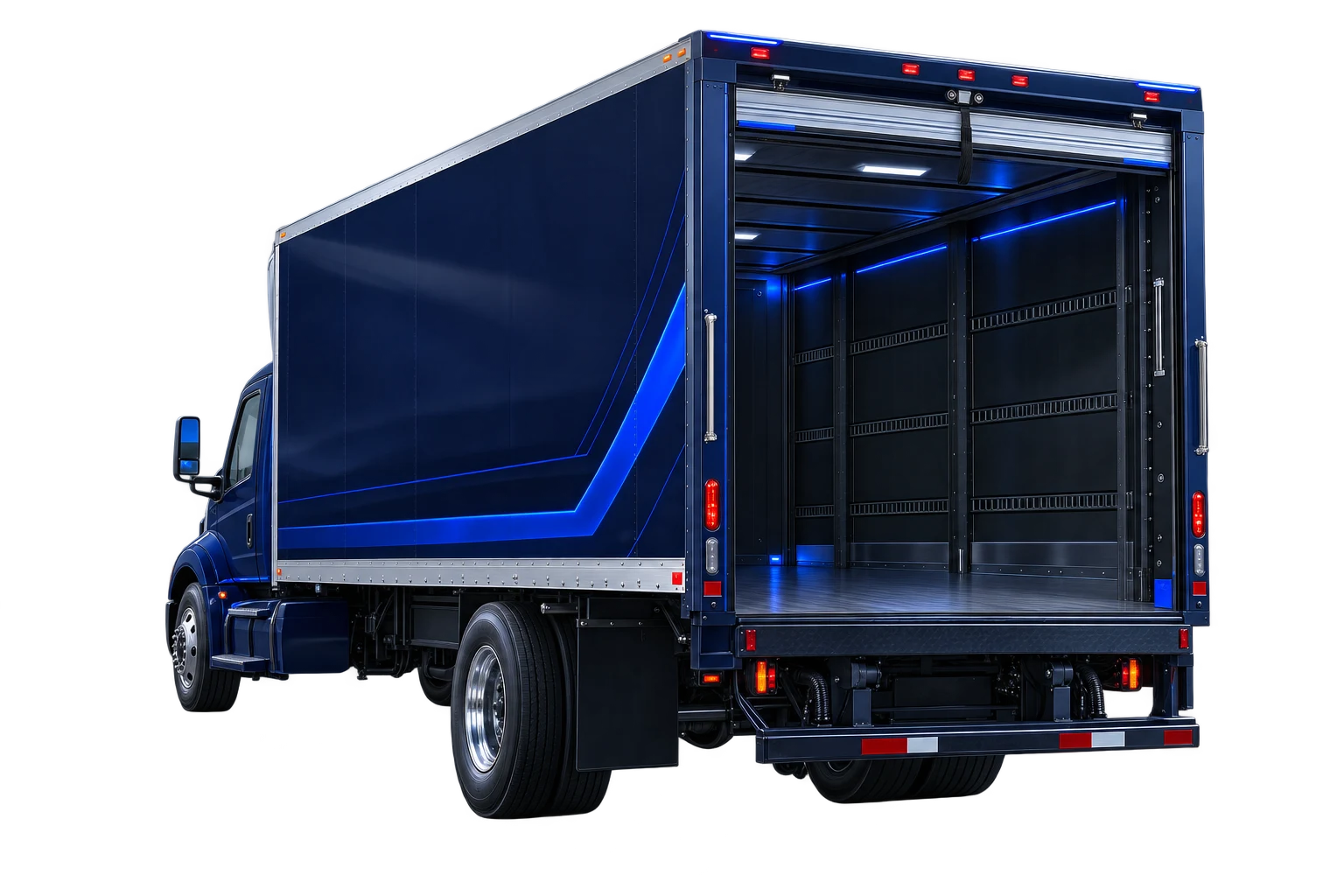
A liftgate is a powered steel platform mounted to the back of a truck or trailer. It folds down, accepts a pallet or heavy piece, and lowers it hydraulically from trailer height — roughly 48–52 inches — to the ground. With a pallet jack, one driver can then move the freight to a curb, garage, or doorway.
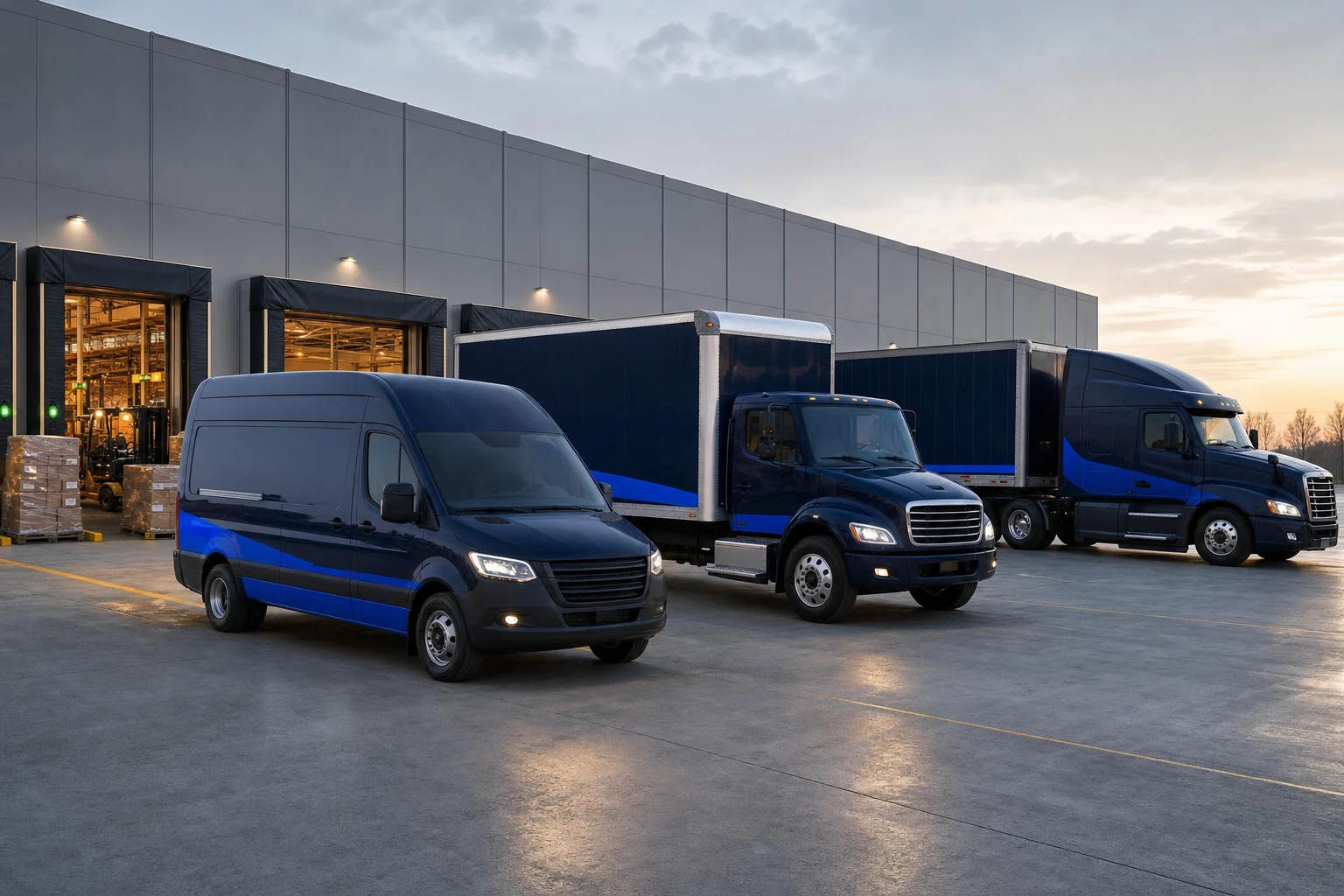
That's the entire trick, and it's what makes heavy freight possible at any address without a loading dock. Trucks don't carry them by default: a liftgate adds weight, cost, and maintenance, so carriers equip only part of their fleet and dispatch those vehicles where they're requested. Our own same-day and final-mile fleet — 26–53 ft box and straight trucks — runs liftgate and pallet jack equipped for exactly this reason: most of the addresses heavy freight actually goes to don't have docks.
Addresses that need one
Book a liftgate any time either end of the move can't bridge the gap between trailer height and ground:
- Residential addresses. Homes don't have docks. Any pallet or piece too heavy to hand-carry off a truck needs a gate.
- Storefronts and strip malls. Retail receiving is usually a back door at street level. Store restock freight moves on liftgates constantly.
- Job sites. Construction and install sites rarely offer a dock, and the forklift that's "definitely there" has a way of being elsewhere at delivery time.
- Offices, clinics, gyms, schools. Street-level buildings that receive equipment a few times a year, not pallets a day.
- Warehouses without a working dock or forklift. Having a building doesn't mean having equipment. If you're not certain, ask the receiver a direct question: "can you take freight off a truck four feet in the air?"
The mirror rule applies at pickup. Shipping out of a garage, storage unit, or dockless shop? The pickup truck needs the gate too — getting 500 lb up is the same problem as getting it down.
What happens when you skip it
The failure mode isn't dramatic — it's expensive paperwork. The driver arrives, the freight can't come off, and one of three things happens:
- Redelivery. The freight returns to the terminal and comes back on a liftgate truck another day. You pay the liftgate fee you avoided, plus a redelivery charge, plus the days.
- An improvised unload. Someone recruits three bystanders to muscle a 400 lb crate off a trailer. Sometimes this works; sometimes it produces a damaged item, a denied claim (freight left the carrier's custody unsafely), or an injured back. Drivers are within their rights to refuse it.
- A dock detour. The receiver drives to the terminal or a friend's dock to meet the freight. Workable for a business with a truck; not a plan for a customer's home delivery.
Every one of these costs more than the accessorial fee — market-reported liftgate charges typically run in the low-to-mid double digits to low triple digits per stop, while a redelivery on top of it roughly doubles the pain. Declaring the gate upfront is the cheapest this service ever gets.
Limits: what a liftgate can and can't lift
Typical gates on box trucks and LTL trailers are rated around 1,500–3,000 lb with platforms roughly 80” wide and 30–60” deep. Inside those numbers — which cover nearly everything in the 150–1,500 lb final-mile range — the operation is routine. Outside them, plan differently:
- Very long pieces (12 ft crates, machinery skids) can overhang the platform and need a flatbed with a forklift or crane instead.
- Single pieces past the gate's rating need dock-to-dock routing or specialized rigging.
- Ground conditions matter: a gate needs firm, level ground to land on. A steep driveway or soft lawn can turn a routine stop into a curbside delivery.
Liftgate vs. inside delivery vs. white glove
These three get confused because they often appear on the same invoice — but they stack; they don't substitute:
- Liftgate gets freight from trailer height to the ground. That's where the standard service ends: at the curb or threshold.
- Inside delivery moves it past the threshold — into the garage, the first room, or a suite down the hall. Separate service, separate line item.
- White glove adds people and care: two-person teams, room-of-choice placement, unpacking, sometimes debris removal. This is the tier heavy home deliveries deserve, and it's a core part of our final-mile service for 150–1,500 lb pieces.
Order the tier the delivery actually needs. A pallet to a shop with a hand truck and staff needs a liftgate only; a treadmill to a second-floor bedroom needs all three.
How to describe a site so the right truck shows up
When you request a quote, one honest paragraph about the destination prevents the whole failure chain. Cover: dock or no dock; forklift on site or not; business, residence, or business-in-a-residential-zone; stairs, elevators, or long carries between curb and door; access constraints — gated entries, alleys, low canopies, tight cul-de-sacs, appointment-only receiving. Photos of the delivery spot help more than any form field. Because we run our own liftgate-equipped fleet with live status and photo proof of delivery, a well-described stop becomes a one-visit stop — which is the outcome everyone is paying for.
For a deeper look at the moves around the liftgate — palletizing, freight class, choosing between LTL and dedicated — see our guide to shipping 150–1,500 lb freight.
FAQ: Liftgate delivery
What does liftgate delivery mean on my quote?
It means the truck will carry a powered platform that lowers your freight from trailer height to the ground, and a driver with a pallet jack to move it to the curb or threshold. It does not include carrying freight inside — that's inside delivery, a separate service.
How much weight can a liftgate handle?
Common gates are rated around 1,500–3,000 lb, which covers nearly all final-mile freight. Very long or overweight single pieces need flatbed, forklift, or rigging solutions instead — flag the dimensions when quoting and the routing gets planned around them.
Do I need a liftgate at a business address?
Only if the business can't unload from trailer height. Storefronts, offices, clinics, and shops without docks or forklifts all need one. "Commercial" describes the billing, not the equipment — answer based on what's physically at the door.
What if I forgot to book a liftgate?
Call before the truck rolls. Adding the accessorial in advance costs a standard fee; discovering the problem at the address usually adds a redelivery charge and days of delay on top of it.
Can a liftgate deliver on a hill or gravel driveway?
Gates need reasonably firm, level ground to land freight safely. Steep grades, soft surfaces, and tight approaches may move the delivery point to the nearest safe spot — usually the curb. Mention the terrain when booking and the driver arrives with a plan instead of a surprise.
Is liftgate service included in same-day freight?
On our same-day Los Angeles runs, the fleet is liftgate and pallet jack equipped as standard practice — but say what the destination looks like anyway, so dispatch sends the right vehicle the first time. See the same-day freight service page for how those runs work.
About the author
DirectXpress Dispatch
Dispatch and Operations, DirectXpress
The dispatch team at DirectXpress, an Ontario, CA freight company holding both broker and motor carrier authority (MC 1801477 / USDOT 4539992). Same-day LA County freight, heavy final mile for 150-1,500 lb shipments, and nationwide LTL.