
Why Heavy Deliveries Fail at the Door
Five questions to answer before a pallet leaves the dock, so the driver arrives knowing what the delivery needs.
Many failed heavy deliveries have nothing to do with the highway. The truck gets there; the trouble starts in the last hundred feet, at the door, when something nobody planned for shows up: a flight of stairs, a gate code no one shared, a receiver who isn't there during the window the shipper gave the carrier. The freight goes back on the truck, the delivery gets rescheduled, and someone pays for the same trip twice.
For a shipper moving palletized, crated or oversized freight in the 150 to 1,500 lb range, these problems are worth planning for because they are preventable. In each case the freight itself was fine. The gap was between what the shipper knew about the destination and what the carrier needed to know before showing up.
This post lays out five questions to answer before the shipment is booked. They do not cover every way a delivery can go wrong — weather, traffic and damage in transit are separate problems — but they cover the access and information problems a shipper can settle with a phone call to the receiver. None of them are complicated, and all of them are easy to skip when a shipper assumes the address looks like every other address they've shipped to.
Question one: does the receiver have a loading dock?
Whether the destination can take freight off a truck is the first thing to confirm. Some receiving sites have a dock, a forklift and staff who receive palletized freight every day; many small storefronts, homes and job sites have none of those. You cannot tell which from the type of business, so ask.
The mistake shippers make is assuming dock access from the address rather than confirming it. A small furniture showroom in a strip mall looks like a commercial address on paper, but its loading area might be a single door at street level with a curb, not a dock with a leveler. If the driver arrives expecting a dock and finds a curb, the freight needs another way off the truck that wasn't planned, and the appointment slips.
The fix is to ask the receiver directly: "Does your location have a loading dock that a box truck or trailer can back up to, or equipment such as a forklift and someone to operate it? Or does the driver need to unload at ground level?" Freightquote's shipping guidance makes the same point for flatbed freight: make sure pickup and delivery locations "have proper equipment to load/unload the freight," such as a crane or forklift, or a dock. If the answer is no dock and no equipment, a liftgate is the usual solution — tell dispatch what the site has and let them confirm whether a liftgate suits the load and the site. Our liftgate delivery service covers ground-level unloading with a liftgate and, where you book it, inside placement past the curb.
Confirming this before the truck is dispatched is what keeps a driver from arriving at a site where no one can get a 400 lb pallet off the truck safely.
Question two: is someone actually going to be there?
Whether freight can be left without anyone present depends on the service you book. Some carriers sell a no-appointment option: FedEx Freight Direct's Basic level, for example, is a "no appointment delivery" to the front door, back door, garage or patio with no signature required. Other service levels, including FedEx's appointment tiers, require someone to be there. When the delivery calls for a signature, inside placement or help deciding where the freight goes, someone has to be present to receive it; if nobody answers during the window, the stop can end as a failed attempt and a reschedule.
A common way this goes wrong: the shipper confirms a delivery date with the receiver but not a window, and the receiver assumes "sometime Tuesday" means they can step out for a couple of hours. The truck arrives and nobody answers.
The fix is a firm appointment window, communicated to the receiver in a way that makes clear someone needs to be present, not just aware that the delivery is happening sometime that day. For residential and business final mile stops, our final mile delivery service offers scheduled appointments and delivery time windows, with advance notification and reminders for residential receivers, so the receiver has a specific window rather than a day-long guess.
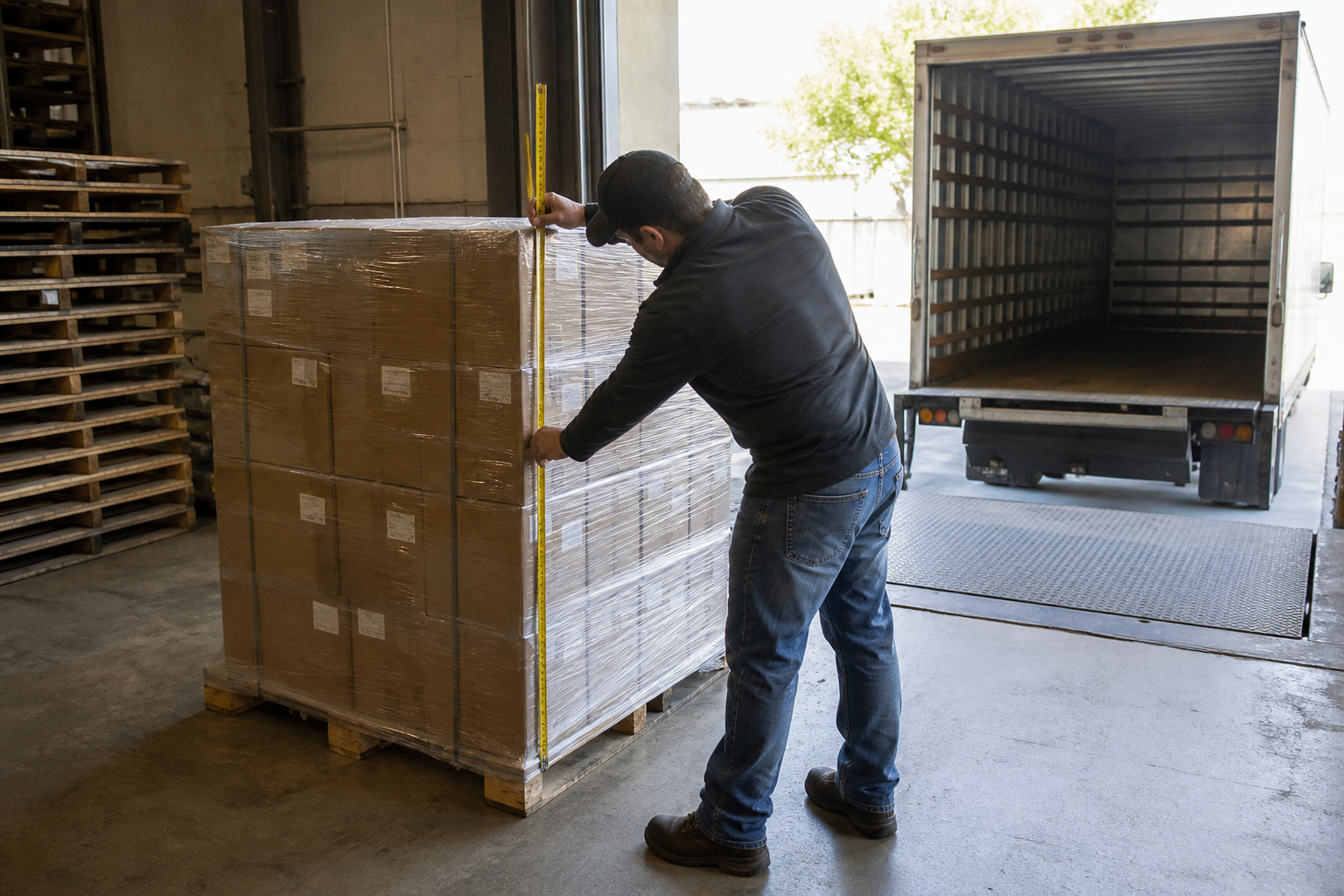
Measuring the packed freight and confirming the access path before the pallet leaves the dock removes one of the avoidable reasons a delivery stalls.
Question three: will the freight actually fit through the door?
This one gets overlooked because it feels like the receiver's problem, not the shipper's. But a crated piece of equipment that's 34 inches wide doesn't care whose problem it is if the doorway is 30 inches. If the freight doesn't physically fit through the entrance, hallway or stairwell it needs to pass through, the delivery stalls however well everything else was planned.
Measure the freight as it will actually travel — packed, on its pallet or in its crate — not the product's catalog dimensions. Don't assume a palletized load can be broken down or tipped on its side to get through a door: whether the contents may be unpacked or tilted depends on the product, and breaking a load down is a handling service to agree in advance, not something to count on at the door. Shippers moving this kind of freight into older buildings, walk-up units or job sites with tight access should confirm doorway width, stairwell clearance and elevator dimensions if the destination is above ground level, before the shipment is booked.
This is also where knowing whether the delivery is inside placement or dock-to-dock matters. A dock-to-dock handoff at a warehouse stops at the dock, so interior doorways don't come into it. A residential or small-business delivery that requires inside placement does. Carriers draw these lines explicitly: FedEx Freight Direct's Standard level delivers to "the first available living space" at ground level only, while its Premium level delivers to the room of the receiver's choice but "will not include any floor above or below ground level beyond two flights." Asking the receiver to measure the whole path the freight will travel, not just the front door, catches problems a phone call alone won't.
Question four: who's authorized to accept and sign for it?
Many heavy freight services ask for a signature at delivery, and some also record photos as proof of delivery; DirectXpress attaches photos, signature and delivery notes to the order. That's straightforward when the receiver is the person who ordered the freight. It gets complicated at commercial addresses with multiple departments, security desks or third-party receiving staff who don't know a delivery is coming and may not be authorized to sign for it.
A typical example: freight arrives at a corporate office or retail location, the front desk has no idea a delivery was expected, and nobody there can accept it on the company's behalf. The driver waits while someone tracks down the right person, or the delivery is refused and rescheduled.
The fix is naming a specific receiving contact, by name if possible, when the shipment is booked, and making sure that contact knows the delivery window and that they are the one expected to sign. For businesses with recurring deliveries to the same location, such as store restock programs, that contact is set up once and then only needs updating when it changes. Our store restock delivery service runs these recurring deliveries, where a receiving routine that both sides already know can make each delivery easier to plan.
Question five: does the carrier actually know about the special handling?
The fifth problem isn't the receiver at all; it's the shipper not passing along something they already knew. A driver who shows up without knowing a delivery needs a liftgate, that the address has a locked gate with a code, or that the freight has to go up to a second floor with no elevator, is set up to fail through no fault of their own.
This tends to happen when special handling requirements live in an email thread or a phone call between the shipper and the receiver but never make it into the shipment booking. The carrier works from what's on the order. If "call ahead 30 minutes" or "liftgate required" isn't written into the booking, the driver may never see it.
The fix is treating every piece of special handling information as data that belongs on the shipment record, not in a side conversation. Gate codes, contact names, floor number, dock or no dock, call-ahead requirements: write all of it into the booking, and ask dispatch to confirm they have it. DirectXpress's quote form has fields for liftgate at pickup and delivery, destination type and freight details such as receiving hours and appointment requirements, and each shipment lives on a single order record from booking through settlement. On the technology side, exception alerts flag access problems, refused deliveries and missed windows with a recommended next step, so a problem found on one attempt can be dealt with before the next.
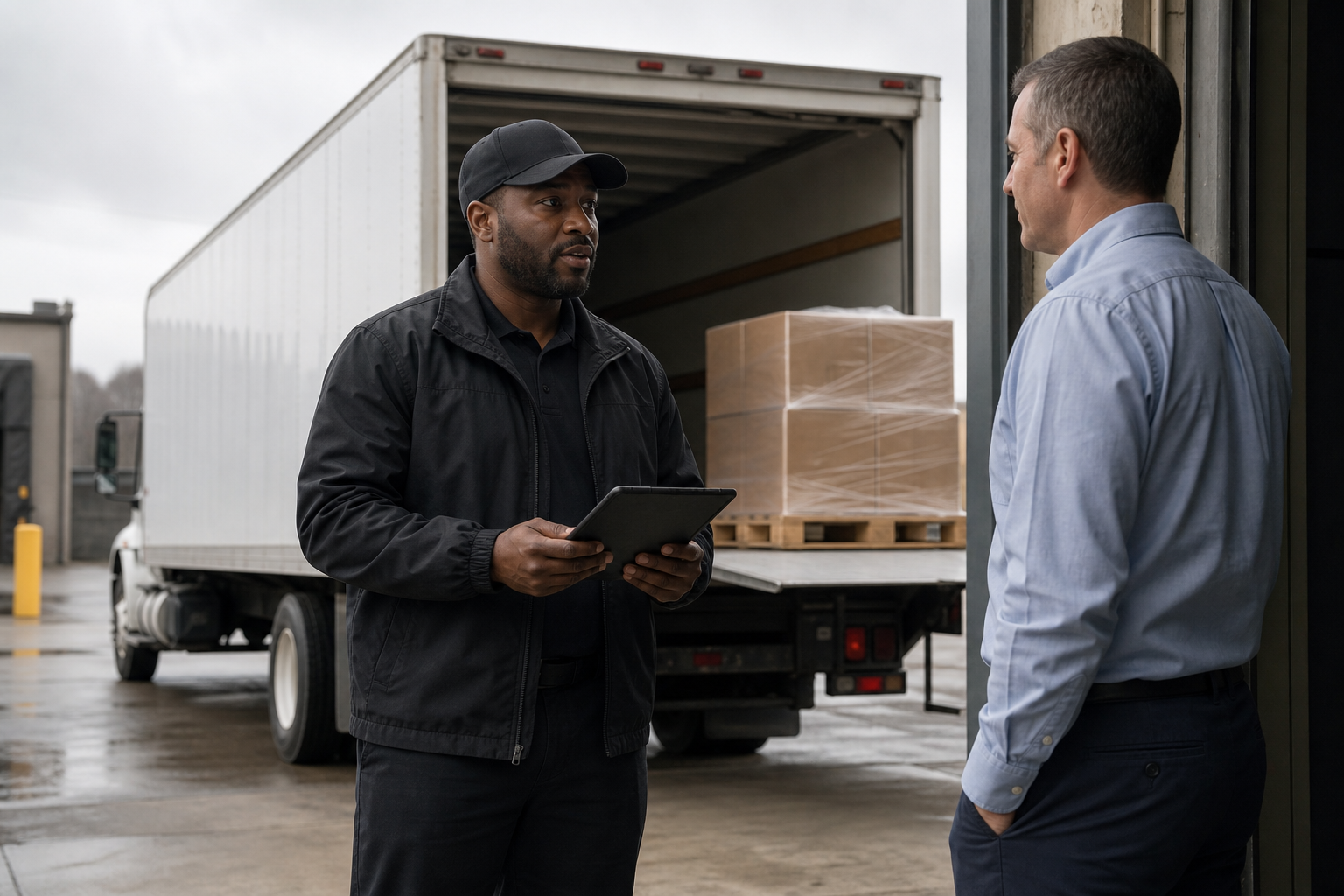
Special handling requirements belong on the shipment record, not in a side conversation between the shipper and the receiver.
Putting the five questions to work before booking
None of these questions require special software or a long checklist. They require a short conversation with the receiver before the shipment ships, and a habit of writing down the answers where the carrier can see them. In practice, that looks like:
- Confirm a dock the truck can use, or unloading equipment and someone to operate it; if there's neither, ask dispatch whether a liftgate is needed and suitable for the load and site.
- Set a specific delivery window and confirm someone will be present if the service needs a signature or placement, not just "sometime that day."
- Measure the packed freight and check doorway, hallway, stairwell and elevator dimensions if the freight needs inside placement.
- Name a specific receiving contact who is authorized to accept and sign for the shipment.
- Put every special handling requirement — gate codes, call-ahead instructions, floor number — on the shipment booking itself, not in a separate email.
For shippers moving freight regularly into Los Angeles County, Orange County or the Inland Empire, this gets easier once it's part of the booking routine rather than repeated from scratch every time. Our final mile delivery service offers appointment scheduling, delivery windows and residential access planning, and our tracking and exception alerts keep the order record, photos and any exceptions in one place. The answers to the five questions are what make those tools useful: give dispatch the details, and ask them to confirm what they have before the truck is dispatched.
FAQ: heavy deliveries that fail at the door
What are common reasons a heavy delivery fails at the door?
Access and information problems: no dock or unloading equipment for a delivery that needed one, nobody present when the service required a signature or placement, freight that doesn't fit the doorway or stairwell, no one authorized to sign, and special handling instructions that never made it onto the booking. Each can be checked with the receiver before the shipment ships.
Do I need to book a liftgate for every heavy delivery?
No. A site with a dock the truck can use, or a forklift and someone to operate it, may not need one. A site with neither usually does. Tell dispatch what the destination has and ask them to confirm whether a liftgate is needed and suitable for the load before you book.
Who is responsible for making sure freight fits through the destination doorway?
Practically speaking, the shipper and receiver share this. The carrier can only work with the dimensions and access information provided at booking. Measuring the packed freight, the doorway, the hallway and any stairwells or elevators it must pass through is worth doing before the shipment ships, not after the driver arrives.
What happens if a delivery attempt fails?
The shipment typically has to be rescheduled for another attempt, which adds time and can add handling and cost. That is why confirming access, timing and a named receiving contact in advance matters: it's easier to solve on the phone the week before than after a failed attempt.
How does DirectXpress handle delivery details and exceptions?
The quote form collects liftgate needs, destination type and freight details such as receiving hours and appointment requirements, and each shipment sits on one order record with photo and signature proof of delivery. Exception alerts flag access problems, refused deliveries and missed windows with a recommended next step. Give dispatch complete details and ask them to confirm them before pickup.
About the author
DirectXpress Dispatch
Dispatch and Operations, DirectXpress
The dispatch team at DirectXpress, an Ontario, CA freight company holding both broker and motor carrier authority (MC 1801477 / USDOT 4539992). Same-day LA County freight, heavy final mile for 150-1,500 lb shipments, and nationwide LTL.