
Shipping Out of an Inland Empire Import Warehouse
A practical guide to moving freight out of Inland Empire import warehouses to LA, Orange County and beyond.
Why the Inland Empire is a freight bottleneck and an opportunity
The Inland Empire, Ontario, Fontana, Rialto, Mira Loma, and the surrounding corridor along the 60, 10 and 15 freeways, is a warehouse corridor inland from the ports of Los Angeles and Long Beach. Containers that land at those ports can move inland to bonded and unbonded warehouses, and from there get broken down into pallets, cases and cartons headed for retail stores, e-commerce fulfillment centers and end customers across Southern California and beyond.
That concentration of import volume creates a specific shipping problem that doesn't look like a typical freight lane. It's not one warehouse shipping one product to one customer. It can be dozens of SKUs breaking out of a single facility, headed to a mix of destinations, on a schedule set by container unload dates rather than by the shipper's own planning calendar. A warehouse that just received three containers doesn't get to decide when the freight needs to move out. It needs to move as space, staffing and downstream commitments allow.
DirectXpress dispatches its own fleet directly out of Ontario, at 3625 Jurupa Street, putting it inside the same corridor as these import warehouses. That matters less as a marketing point and more as a practical one: freight moving out of an Inland Empire warehouse to a nearby LA or Orange County destination can be booked as a local same-day or scheduled run when the carrier is already local, with the actual timing confirmed by dispatch for the specific lane and receiving window, rather than waiting on a truck to reposition from somewhere else.
Mapping the lanes: where import freight actually goes
Freight breaking out of an Inland Empire warehouse falls into a handful of lane types, and each one calls for a different approach:
- Local and regional final mile. Pallets or crated freight headed to a business or residential address within the Inland Empire, LA County or Orange County. This is short-haul, can be single-stop, and is time-sensitive when it's tied to a customer delivery commitment.
- Retail and store distribution. Cartons or pallets breaking out to multiple store locations on a recurring cycle, restocking shelves or supporting a new store opening. This lane type is naturally suited to a milk run or dedicated route rather than one-off bookings.
- Warehouse-to-warehouse transfer. Freight moving from an import or bonded warehouse to a second facility, a 3PL, a fulfillment center, or a retailer's own distribution center, before it ever reaches an end customer.
- Nationwide LTL. Freight that's cleared the region entirely and needs to move cross-country to a distributor, retailer or customer outside Southern California.
One mismatch that causes friction is treating all of these as the same problem. A pallet going three miles down the road doesn't need the same handling, paperwork or timeline as a pallet going cross-country, and a warehouse that books every outbound shipment the same way risks either overpaying for speed it didn't need or under-planning for freight that genuinely needed it.
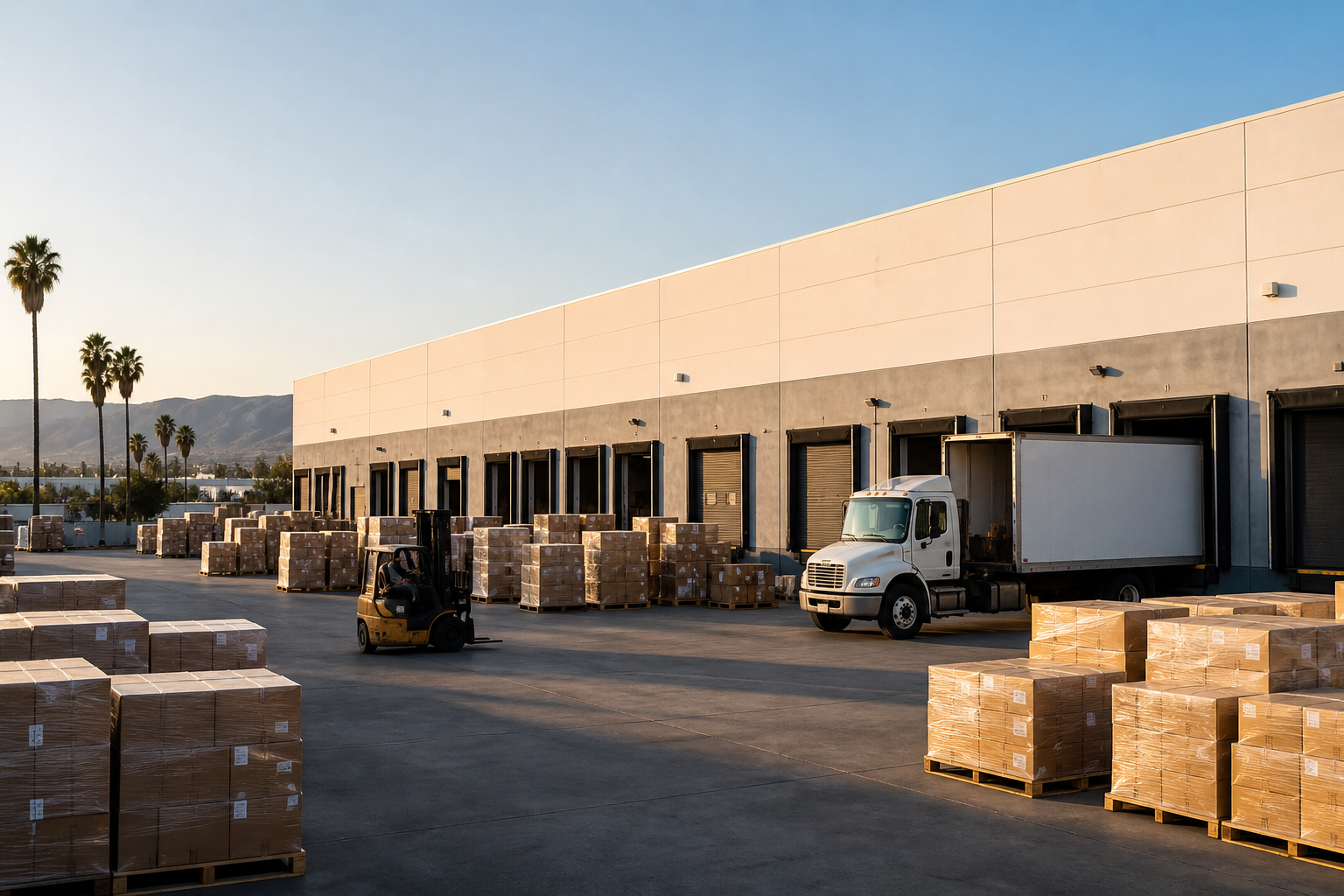
Import freight staged at a dock can break out to local, regional and nationwide lanes.
Matching the lane to the service
Once a warehouse operator can name the lane type, matching it to a service gets a lot simpler. A same-day delivery to a customer or store within the LA or Orange County radius fits our same-day freight delivery service, which is built for exactly this kind of short-haul, time-sensitive local move. Freight headed to a residence, whether that's an appliance, furniture piece or oversized item going direct to an end customer, fits our final mile delivery service, which covers that last delivery step with appointment scheduling, delivery windows and photo proof of delivery.
Recurring store distribution, whether it's ongoing restock or a new-store opening cycle, is worth pricing as a dedicated route alongside booking fresh every time. Our store restock delivery service is designed around that recurring pattern specifically, covering multiple stops on a predictable schedule instead of treating each store as its own shipment.
Freight that's genuinely leaving the region needs a different structure entirely. Our nationwide LTL service moves palletized and crated freight through a vetted partner carrier network once it's outside the range our own fleet covers directly. The handoff between our fleet and that partner network is a point where freight can be lost track of if it isn't planned for up front, which is why it's worth naming the destination and lane type at the quoting stage rather than after the freight is already staged on the dock.
Handling the volume: batch bookings and exception visibility
A single import warehouse can generate dozens of outbound shipments in a day, each with its own destination, weight and handling requirement. Booking that volume one shipment at a time, through a phone call or a one-off web form, doesn't scale once the warehouse is running multiple containers a week. That's the operational reality batch upload and platform-based booking are built to solve: a warehouse operator uploads a batch of shipments at once instead of re-entering the same information dozens of times over.
Visibility matters just as much once the freight is moving. A warehouse that's shipped a batch of twenty pallets to twelve destinations needs to know, in real time, which ones delivered on schedule and which ones are running into a problem, a closed dock, a missed appointment window, a damaged pallet. Our tracking and dispatch platform is built around that kind of visibility, with exception alerts that flag a shipment when a problem comes up rather than leaving the warehouse to find out after the fact from an unhappy customer.
Photo and signature proof of delivery closes the loop on each of those shipments individually. For a warehouse fielding claims or disputes on any of the freight it ships out, having a documented record tied to each delivery, not just a general assurance that "it probably arrived," gives both sides a record to work from when a disagreement comes up.
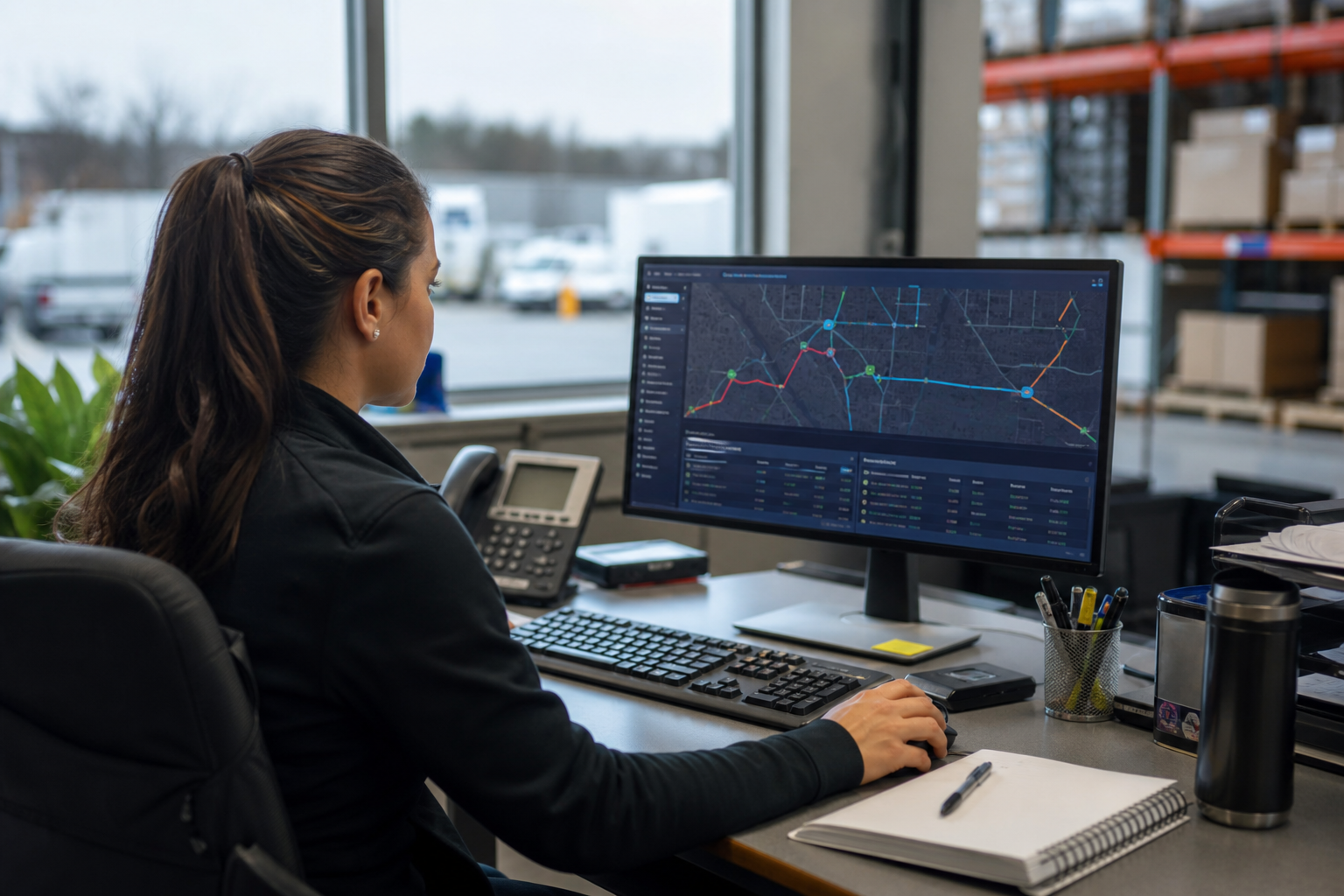
Batch bookings and exception alerts keep a high-volume warehouse from losing track of individual shipments.
What to have ready before you call for a quote
A quote is more accurate the first time when the warehouse has the same handful of details ready, rather than working through them on the call:
- Weight and dimensions per shipment. Our core service band covers 150 to 1,500 lb palletized, crated or oversized freight, but the quote form accepts anywhere from under 150 lb up to 5,000 lb and beyond. Knowing the actual weight and footprint up front avoids a second round of questions.
- Origin and destination type. A dock-to-dock move between two commercial warehouses is a different job than a dock-to-residence delivery. Naming the destination type, business, warehouse or residential, up front lets the right equipment and service get matched immediately.
- Frequency. A one-time move gets quoted differently than a recurring lane. If the shipment is the first of a pattern, saying so up front is what opens the door to a milk run or dedicated route conversation instead of a series of one-off bookings.
- Special handling needs. Liftgate requirements, appointment-only receiving docks, inside delivery, or freight that needs specific equipment should be flagged at quoting, not discovered by the driver at the dock.
Warehouses that batch multiple shipments together, several pallets going to different destinations on the same day, benefit from naming that up front too. It's the difference between quoting five shipments individually and planning them as a coordinated dispatch, which can be both faster to book and easier to track once it's moving.
Why local dispatch changes the math for import freight
Freight breaking out of an import warehouse can be working against a compressed timeline already. A container that unloaded Monday might need its contents on store shelves or at a customer's door by the end of the week, which leaves little room for a carrier that has to reposition equipment from another region before it can even start the job.
Dispatching directly out of Ontario means the fleet, a 26 ft box truck fleet configuration, straight trucks and access to 53 ft trailers for larger loads, is already positioned inside the same corridor as Inland Empire import warehouses. For a shipment headed to LA County or Orange County, that can mean a same-day pickup and delivery, with timing confirmed by dispatch for the lane, instead of waiting for equipment to reposition.
It also means the carrier relationship isn't a black box. With a broker-only provider, the truck and driver moving the freight belong to another company. DirectXpress holds dual authority, operating as both a freight broker and a motor carrier, so freight moving on our own fleet is dispatched directly, while freight moving nationwide through our LTL partner network still runs through the same quoting and tracking process. That combination matters for a warehouse trying to manage both local urgency and national reach without juggling two separate vendors.
FAQ: Inland Empire warehouse shipping
What's the difference between shipping local final mile and nationwide LTL out of an Inland Empire warehouse?
Local final mile covers freight moving to a business or residential address within the Inland Empire, LA County or Orange County, on our own dispatched fleet as a same-day or scheduled delivery, with the timing confirmed by dispatch for the actual lane and receiving window. Nationwide LTL covers freight leaving the region entirely, which moves through our vetted partner carrier network rather than our own trucks. The two are quoted and planned differently because the timeline, equipment and handoffs are different.
Can a warehouse book multiple outbound shipments at once instead of one at a time?
Yes. Batch upload lets a warehouse submit several shipments in one pass instead of re-entering the same information for each one, which matters for any facility moving a meaningful volume of outbound freight in a day.
How does a warehouse know if recurring store deliveries should become a dedicated route?
The main signal is a repeating pattern: the same lane, the same stops, or the same schedule showing up week after week even though each one gets booked as a fresh shipment. Once that pattern is clear, it's worth pricing a milk run or dedicated route alongside continued one-off bookings.
Does DirectXpress handle both the local delivery and the nationwide LTL leg of a shipment?
Yes. DirectXpress operates as both a freight broker and a motor carrier, dispatching its own fleet for local and regional moves across the Inland Empire, LA County and Orange County, and coordinating nationwide LTL moves through a partner carrier network for freight leaving the region.
What weight range does DirectXpress typically handle for Inland Empire warehouse freight?
The core service band is 150 to 1,500 lb, covering palletized, crated, heavy and oversized freight. The quote form accepts shipments under 150 lb and up to 5,000 lb or more, so it's worth naming the actual weight and dimensions when requesting a quote rather than assuming a shipment falls outside the range.
Plan your outbound lane
Ready to plan an outbound lane from your facility? Visit our quote page to get a lane-specific quote, or explore the full range of freight services we offer across Southern California.
About the author
DirectXpress Dispatch
Dispatch and Operations, DirectXpress
The dispatch team at DirectXpress, an Ontario, CA freight company holding both broker and motor carrier authority (MC 1801477 / USDOT 4539992). Same-day LA County freight, heavy final mile for 150-1,500 lb shipments, and nationwide LTL.