
When Recurring Deliveries Should Become a Dedicated Route
Signs a shipper's repeat deliveries have outgrown one-off booking and how milk runs and dedicated routes fix the pattern.
The pattern that hides in plain sight
Most shippers don't decide to set up a dedicated route. They back into it. A retail chain starts calling in a restock delivery every Tuesday. A distributor books the same lane to the same three customers every week, each time as a fresh one-off shipment. A manufacturer keeps requesting a pickup from the same supplier on the same schedule. None of it looks like a pattern from inside the operation, because each booking is handled as its own request, quoted, dispatched, and closed out independently.
The problem with that approach isn't that it fails. It's that it works just well enough to keep going unnoticed. Each individual delivery gets done, so nobody flags it as a process issue. But booking the same lane repeatedly as a series of separate shipments carries hidden costs: more coordination overhead per shipment, less predictable truck assignment, and no structural reason for the carrier to hold capacity for you at the same time each week.
A dedicated route, or a milk run covering multiple stops on a repeating schedule, solves a different problem than any single shipment does. It's not about moving one pallet faster. It's about converting a recognized pattern into a standing plan, with a truck and a schedule built around your actual shipping rhythm instead of your latest request.
This post is about recognizing that pattern early, before it costs more than it should to keep booking around it.
Five signs it's time to stop booking one-offs
There's no single trigger that makes a route "dedicated route ready." It's usually a combination of a few of these signs showing up together:
- The same origin and destination, booked on a recurring cadence. Weekly, twice weekly, or daily, if the lane repeats on a predictable schedule, it's a candidate.
- Multiple stops that could share one truck. If a distributor is sending three separate shipments to three customers in the same area on the same day, that's a milk run waiting to happen, not three unrelated deliveries.
- Booking urgency that's really a scheduling gap. If a shipment keeps getting flagged as urgent or same-day because nobody planned ahead for it, but it's actually the same shipment every week, the fix is a schedule, not another rush booking.
- Inconsistent driver or truck assignment causing friction at the dock. Recurring deliveries handled as one-offs often get a different truck and driver each time, which means the receiving team re-explains dock access, appointment procedures, and paperwork every single visit.
- Growth that's made the manual process harder to manage. A restock schedule that worked fine at two stores becomes a coordination headache at eight, even though each individual delivery hasn't changed.
If two or more of these show up on the same lane, it's worth a conversation about converting it to a standing route rather than continuing to book it fresh every time.
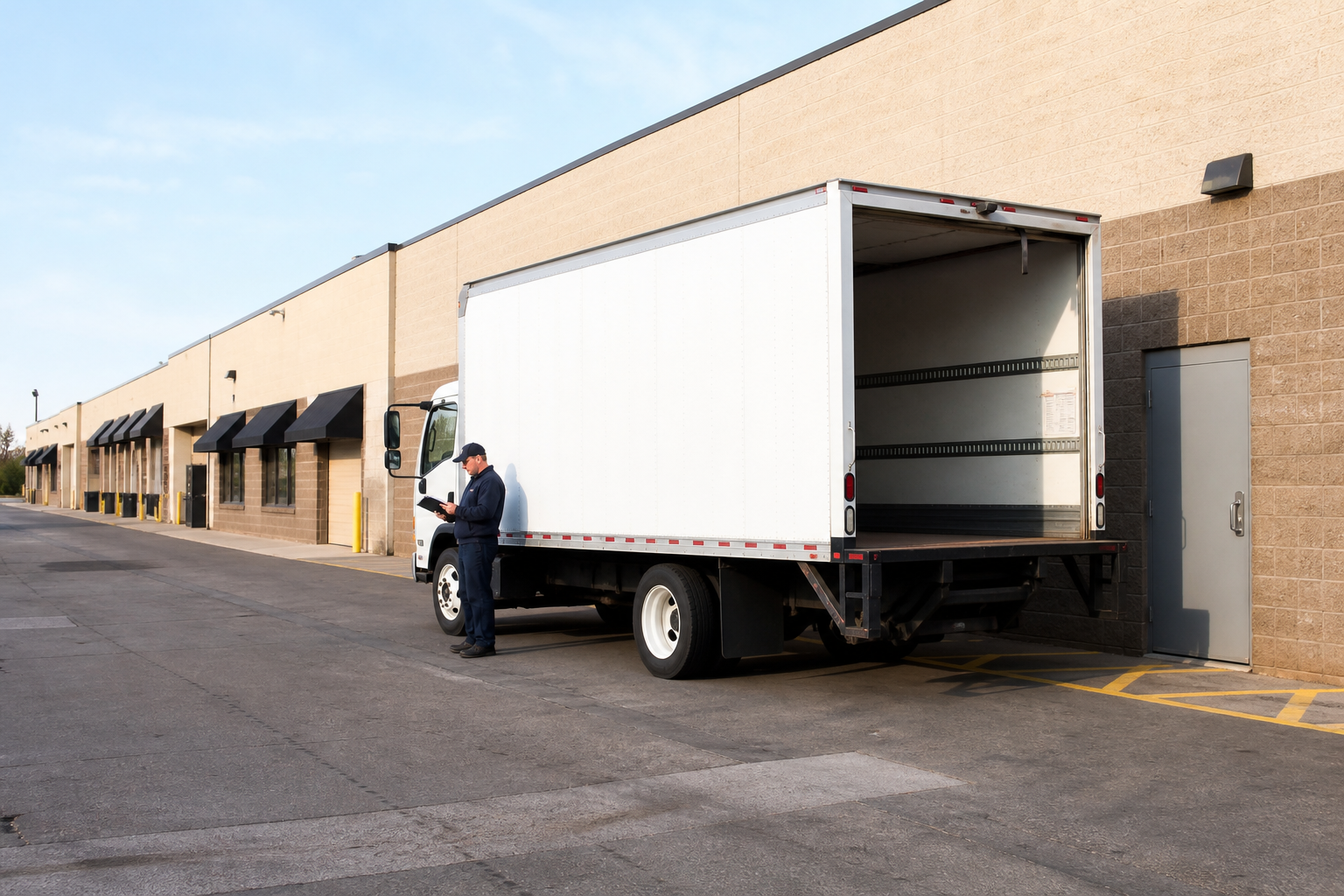
A milk run covers several stops on one repeating schedule instead of separate one-off bookings.
What a dedicated route actually changes
Moving from repeated one-off bookings to a dedicated route doesn't change the freight itself, it changes how the freight gets planned. Instead of each shipment being quoted and dispatched as a new request, the lane gets built once as a standing plan: same pickup windows, same stops in the same order, same expectations on both ends.
For a shipper running store restocks across Southern California, this usually means a route gets built around the actual store list and delivery windows rather than being rebuilt from scratch each time a new location opens. Our store restock delivery service is built around exactly this kind of standing schedule, covering new-store openings and ongoing restock cycles across the region.
For a distributor or manufacturer with recurring stops in the Inland Empire, Los Angeles County, or Orange County, a dedicated route or milk run means one truck and one schedule covering multiple stops that used to be booked as separate deliveries. That consolidation is often what makes the receiving side easier too. A dock team that sees the same driver and the same truck on the same day each week spends less time on paperwork and orientation and more time just unloading.
None of this requires the shipper to guess at scheduling on their own. It starts with a conversation about the actual pattern, how often, how many stops, what's on the truck, and what the delivery windows look like on the receiving end, and the route gets structured from there.
Where dedicated routes overlap with other services
A dedicated route rarely replaces every other freight service a shipper uses. It usually sits alongside them, covering the predictable part of the volume while other services handle the exceptions. A retailer with a dedicated restock route might still need same-day local freight for an unplanned inventory gap, or occasional nationwide LTL for a shipment moving outside the region entirely.
The distinction that matters is between what's predictable and what isn't. Predictable, recurring volume belongs on a dedicated route or milk run, because that's where planning ahead actually saves coordination effort. Unpredictable, one-off, or urgent volume is better served by the freight service built for that situation, whether that's same-day, hot shot, or standard LTL. Trying to force irregular shipments onto a fixed route creates the opposite problem, a schedule that doesn't match the actual freight showing up.
This is also where final mile matters. A dedicated route delivering to residential customers, not just retail stores or warehouses, needs the same care around delivery windows and dock or driveway access that any final mile delivery needs. Our final mile delivery service covers that residential and business final-leg piece, and it can be built into a recurring route just as easily as a one-off booking.
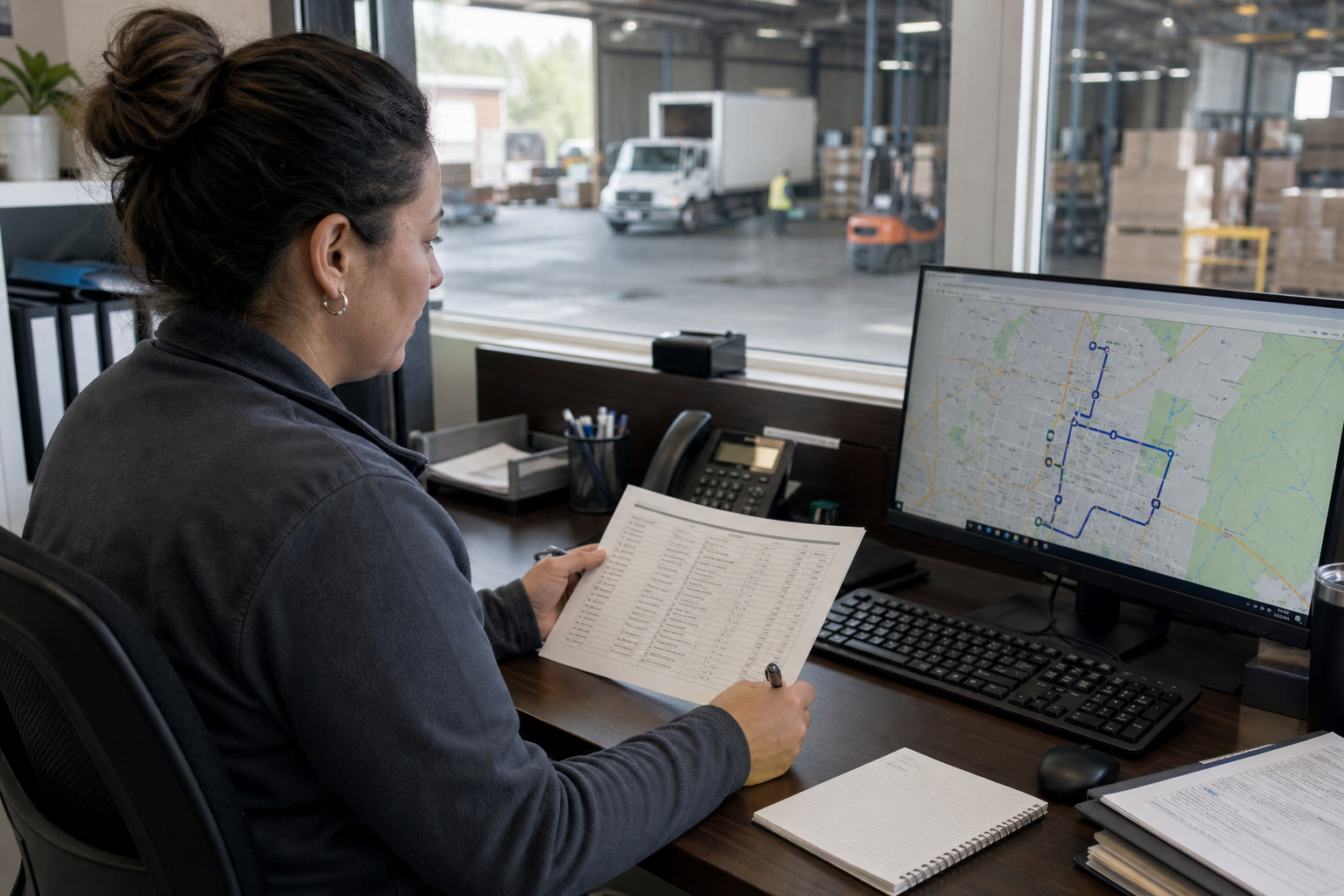
Converting a recurring lane into a standing route starts with mapping the actual stops and windows.
How to start the conversation
Setting up a dedicated route starts with mapping the actual pattern, not with committing to a schedule sight unseen. A shipper considering the switch should be ready to lay out how often the lane runs, which stops are involved, what's typically on the truck (pallet count, weight range, any liftgate or dock needs at each stop), and what delivery windows the receiving side expects.
It's also worth being honest about how much of the volume is actually recurring versus occasional. A route built around five real weekly stops works. A route built around five stops where two only show up sporadically creates the same planning mismatch the shipper was trying to avoid. Separating the standing volume from the occasional volume up front makes the resulting schedule more reliable for everyone, the shipper, the driver, and the receiving dock.
Our quote and route planning process covers this conversation directly, and our tracking platform gives visibility into how a route is performing once it's running, including exception alerts if a stop looks like it's running behind schedule. That visibility matters more for a dedicated route than for a one-off shipment, since the whole point of consolidating a pattern into a route is being able to trust it'll run the same way each time.
What doesn't need to change
Switching to a dedicated route isn't an all-or-nothing decision, and it doesn't require overhauling how the rest of a shipper's freight moves. The exceptions still get handled as exceptions. A route running Tuesday and Thursday can still be supplemented by a same-day booking on a Wednesday when something unplanned comes up. A dedicated route to three regular customers doesn't prevent booking standard LTL for a shipment going somewhere outside that lane entirely.
What changes is just the predictable core. Instead of every recurring shipment starting from zero, the route already exists, the stops are already mapped, and the driver already knows the dock. That's the entire value of converting a pattern into a plan: less coordination spent re-explaining the obvious, more of it spent on the parts of the operation that actually need attention.
For shippers unsure whether their volume qualifies, the simplest test is to look back at the last month of bookings and count how many times the same lane, the same stops, or the same customer combination came up. If the answer is more than a handful, it's worth a conversation, even if the current process technically still works.
Frequently asked questions
What's the difference between a milk run and a dedicated route?
A milk run covers multiple stops on one truck during a single trip, usually a set of deliveries or pickups in the same general area. A dedicated route is the broader term for any standing, repeating schedule built around a shipper's recurring volume, which might be a single lane or might include multiple stops like a milk run.
How much recurring volume do I need before a dedicated route makes sense?
There's no fixed threshold. It depends more on the pattern than the size. A shipper running two predictable weekly deliveries to the same destination can benefit from a standing schedule just as much as one running daily multi-stop routes. The signal to watch for is repetition, not volume alone.
Can a dedicated route include residential final mile stops?
Yes. A dedicated route isn't limited to business or warehouse deliveries. If a shipper has recurring residential deliveries, for example furniture or appliance drop-offs on a repeating schedule, those can be built into the same route planning process as any other recurring stop.
What happens if volume on a dedicated route changes?
Routes get revisited as volume shifts. A route built around eight weekly stops can be adjusted if that grows to twelve or drops to five. The point of setting it up as a standing plan rather than a series of one-offs is that adjustments happen at the route level instead of requiring each shipment to be renegotiated separately.
Do I need to commit to a long-term contract to set up a dedicated route?
Dedicated routes and milk runs are built around the actual recurring pattern a shipper has, and the terms get worked out directly during the quote and planning conversation rather than assumed in advance. The right next step is simply describing the pattern and letting the route get scoped from there.
About the author
DirectXpress Dispatch
Dispatch and Operations, DirectXpress
The dispatch team at DirectXpress, an Ontario, CA freight company holding both broker and motor carrier authority (MC 1801477 / USDOT 4539992). Same-day LA County freight, heavy final mile for 150-1,500 lb shipments, and nationwide LTL.