
Dock-High vs. Box Truck: Matching Truck to Delivery
What dock-high means, when a 53 ft trailer can't reach your address, how liftgates fit in, and what to tell dispatch.
Dock-high means the truck or trailer floor sits at roughly loading-dock height, about four feet off the ground, so a forklift can cross straight from dock to cargo floor. Many box trucks are also built dock-high, and many carry a liftgate, which lets them serve addresses with no dock. Match the truck to the receiving end and delivery is routine; mismatch it and the delivery can fail.
Floor height is one of several site facts that decide whether a delivery works. A 53-foot trailer may not fit into a small strip-mall lot. A trailer with no liftgate at a house can leave a 600 lb crate four feet in the air. A truck whose floor, dock interface or length doesn't suit a distribution center's docks, or breaks a site rule, can be turned away. Accurate site information at booking reduces these avoidable access problems.
What "dock-high" actually means
Pentalift, a loading-dock equipment maker, gives the most common dock height as 48–50 inches above grade, and says truck and trailer bed heights arriving at a dock are generally 46–52 inches. The match is deliberate: the vehicle backs up, a dock leveler bridges the small difference, and a forklift or pallet jack moves freight across without lifting it up or down.
Away from a dock, that same four-foot floor becomes a drop. Ground-level freight can't get up to it, and freight inside can't come down, without equipment designed for that gap: a liftgate, a forklift that can reach the bed, or a ramp or dock lift at the site. Each of those has its own limits on weight and size.
The straight truck tier: freight for everywhere else
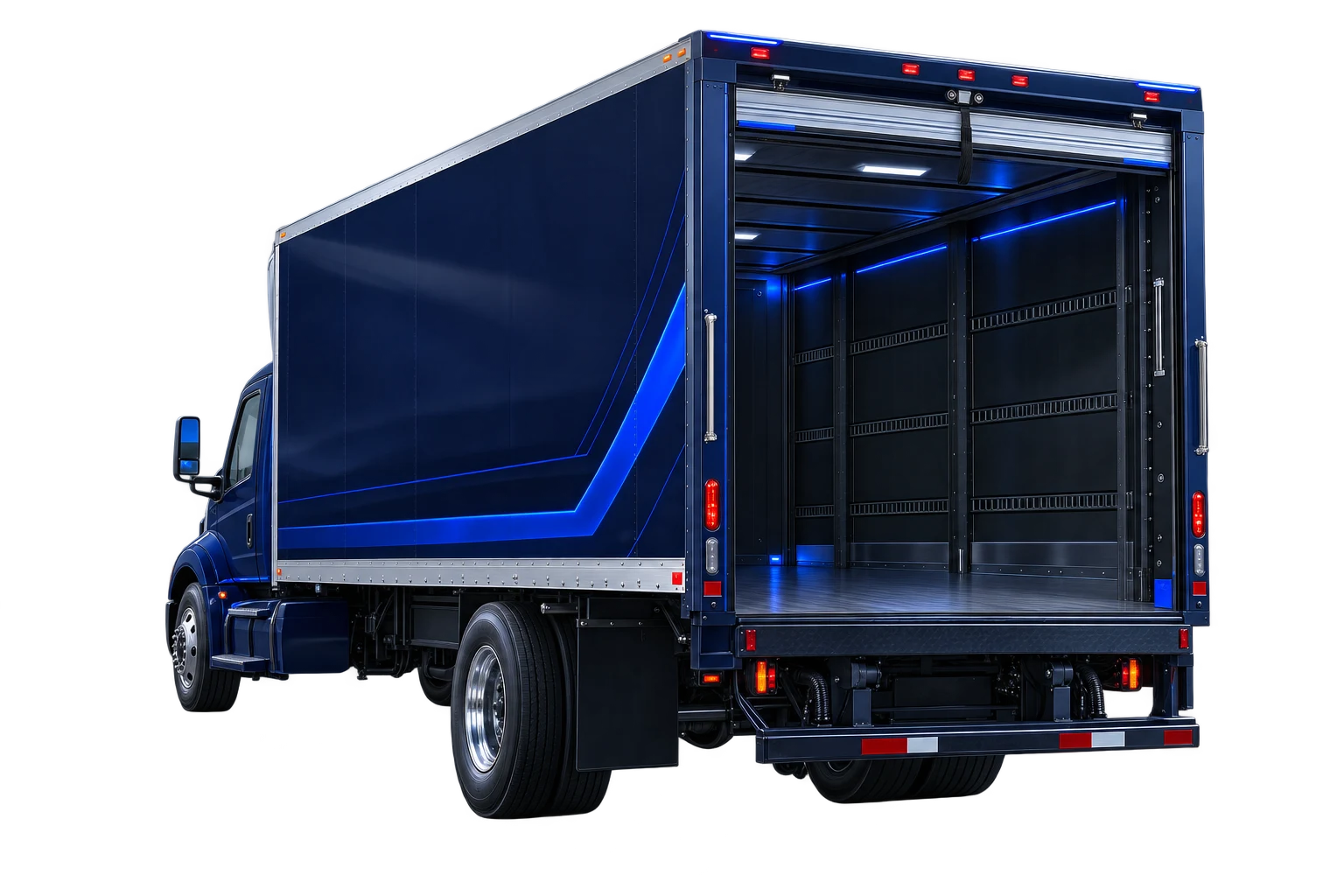
A straight truck puts the cab and the cargo body on one chassis; a box truck is a straight truck with an enclosed box body, and people often use the two terms loosely. Box lengths vary, and many 26 ft box trucks are built at dock height. Enterprise Truck Rental's 26 ft box truck, for example, is listed as "dock high with reinforced body," with a tuck-under liftgate and up to 10,000 lb payload. Two properties make this class useful away from warehouses:
- Liftgates. With a liftgate fitted, the gate does the vertical work: freight rides the platform between truck floor and ground. With a pallet jack, a pallet can then be delivered where there's no dock and no forklift, provided the gate's rating and platform suit the freight and the ground is suitable. That's the usual approach for residential and storefront drops, covered in detail on our liftgate delivery page.
- Maneuverability. A single-chassis truck is far shorter than a tractor pulling a 53 ft trailer, so it can often get into residential streets, alleys and tight lots a full rig can't. Length isn't the only constraint, though: the truck's height, weight and turning space, and the site's grades, clearances and rules, all have to be checked.
This is why the fleet behind our same-day Los Angeles service runs 26 ft box and straight trucks with liftgates and pallet jacks, with 53 ft trailers used for high-volume transfers between warehouses and distribution centers. Los Angeles freight is a mix of real docks and no docks, often on the same route.
When a 53-footer can't serve the address
Full-size tractor-trailers need room: wide approach angles, space to swing the turn, overhead clearance for the trailer, pavement and access roads that can carry a loaded rig (on the Interstate system the federal gross vehicle weight limit is 80,000 lb), and somewhere to park while unloading. Locations that often can't provide that:
- Residential streets with parked cars, trees, or cul-de-sacs with no turnaround
- Older urban commercial strips with alley loading or street-only access
- Shopping centers that restrict trailer sizes or delivery hours
- Job sites with mud, grades or temporary access roads
- Approaches with a low bridge, canopy or parking structure
When a carrier's linehaul trailer can't reach your delivery address, the freight may have to move to a smaller truck. That is separate from the accessorials that can appear on an LTL quote: a limited-access or residential location charge reflects the type of location, and a liftgate charge reflects the gate being used, and either can apply whether or not freight changes trucks. Our accessorials guide explains the common ones. Ask the carrier how it will serve your address, and plan the equipment from the start. On larger shipments, a site that can't take a full trailer also affects whether truckload is an option, so settle access before you weigh whether LTL or a full truckload prices better.
The van tier, and the flatbed exception
Smaller than the box trucks are cargo vans, such as sprinter-style vans. Whether a van suits a shipment depends on that particular van's rated payload and cargo dimensions, and on how the freight gets in and out: many vans have no liftgate, so a heavy piece needs a forklift, a dock or other mechanical loading at both ends. A van can also reach places a larger truck can't. When a heavy piece has to come down to ground level at an address with no dock or forklift, a box truck fitted with a suitable liftgate is often the better fit.
One more shape worth knowing: the flatbed, for freight that loads from the side or from above, such as steel, lumber, or machinery on skids set down by a crane. Side and top access avoid backing into a dock, but the deck is still off the ground, so the site needs a forklift or crane with enough capacity to load and unload, and the freight needs a securement plan suited to it. Flatbeds also give up the weather protection of an enclosed box. For many commercial shippers it's an exception, chosen when the freight's shape, not the site's, makes the call.
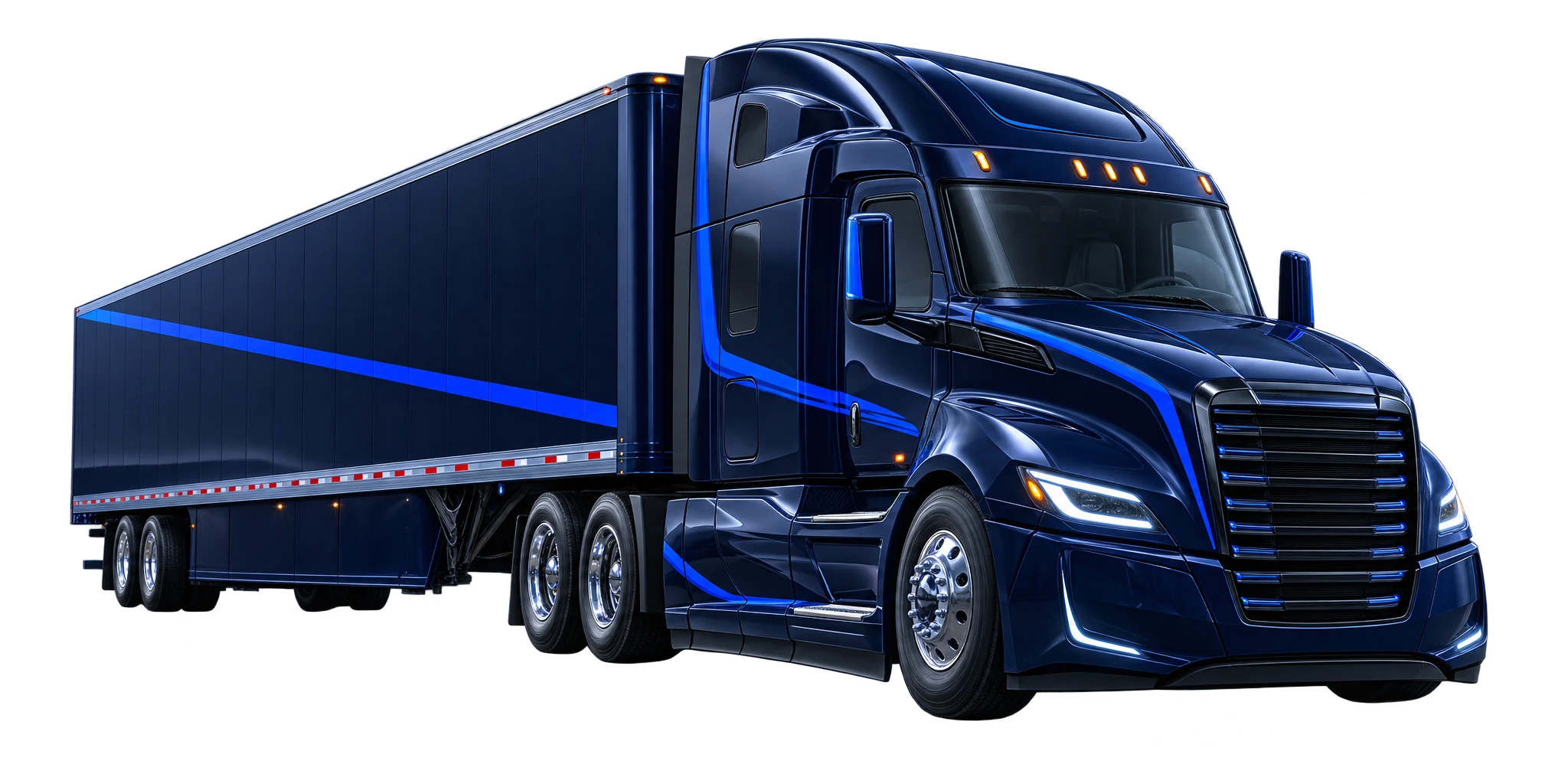
Between the van and the 53-footer sit box and straight trucks with a liftgate and pallet jack aboard. DirectXpress's 26 ft box trucks carry up to roughly 12 pallets with liftgate access, and that combination of capacity and access is why our final-mile service runs on 26 ft box and straight trucks, with 53 ft trailers for warehouse-to-warehouse transfers.
Equipment choice decides whether you need a liftgate
Liftgates get treated as an add-on fee, but the real question is the height gap between the truck floor and the receiving surface, and what equipment is on hand to bridge it:
- Dock to dock: a liftgate usually isn't needed, provided the vehicle's floor height and the dock's leveler are compatible and the site has a forklift or pallet jack to move the freight.
- Dock at one end, ground at the other: the ground end needs a liftgate, unless the site has a forklift or other lifting equipment suitable for the freight and the truck bed.
- Ground to ground: the same question at both ends. Where neither site has suitable equipment, a liftgate truck for the whole move can avoid a transfer between vehicles.
Booking the right vehicle class from the start can avoid a transfer, a failed attempt or a surprise accessorial. Compare total quotes for the same delivery requirements rather than base rates.
What to tell dispatch about your site
Giving dispatch these facts at booking helps avoid access problems. Cover:
- Dock or no dock: and if there's a dock, its height and whether a truck can actually back up to it.
- On-site equipment: forklift, pallet jack, or nothing and nobody.
- Access: residential street, alley, gate codes, low clearance, mall service corridor, dirt lot, grades.
- The freight itself: palletized (see our palletizing guide) or loose pieces, with packaged dimensions and weight.
- Receiving hours and contact: who answers the phone when the truck is ten minutes out.
Include those facts with your quote request, tick liftgate for whichever end has no dock, and choose the right destination type, so the equipment and handling are planned into the quote. It's better to over-describe a loading area than to leave something out.
For the service itself, see our liftgate delivery service page.
FAQ: Freight equipment
What does dock-high mean?
A truck or trailer whose cargo floor sits at about loading-dock height. Pentalift gives the most common dock height as 48–50 inches, with truck and trailer beds generally 46–52 inches. At a dock, freight moves across with a forklift or pallet jack; elsewhere it needs a liftgate or other lifting equipment.
What's the difference between a box truck and a straight truck?
"Straight truck" describes the layout: cab and cargo body on one chassis. "Box truck" describes a straight truck with an enclosed box body. People often use the terms loosely, so at booking ask for the box length, floor height, and whether it carries a liftgate.
Can a 53 ft trailer deliver to a house?
Often it can't, because residential streets may not have the turning room, parking or overhead clearance a full rig needs. Tell the carrier the address is residential and describe the access. Residential and liftgate charges reflect the location and the equipment used; ask separately whether the freight will move to a smaller truck.
How much can a liftgate handle?
It depends on the model. Maxon's product selector, for example, lists liftgates rated from 2,000 to 6,000 lb, with platform sizes that vary by model. Check your freight's packaged dimensions and weight, including a non-standard pallet footprint and any pallet jack riding the platform, against the assigned gate's rating, and flag it when booking.
When is a sprinter van the right choice?
When the freight fits within the van's rated payload and cargo dimensions, and there is a safe way to load and unload it at both ends. Many vans have no liftgate, so a heavy piece going to an address with no dock or forklift is often better served by a box truck with a suitable liftgate.
What if my location has no dock and no forklift?
Say exactly that at booking, and tick liftgate for that end on the quote form so it's priced in. The delivery can then be planned on a liftgate-equipped truck with a pallet jack. Left unsaid, it can lead to a failed first attempt.
About the author
DirectXpress Dispatch
Dispatch and Operations, DirectXpress
The dispatch team at DirectXpress, an Ontario, CA freight company holding both broker and motor carrier authority (MC 1801477 / USDOT 4539992). Same-day LA County freight, heavy final mile for 150-1,500 lb shipments, and nationwide LTL.