
LTL vs. FTL: Which One Does Your Shipment Need?
Rules of thumb for when to quote a full truck instead of LTL, plus the transit, handling and liability differences.
There is no fixed pallet count where full truckload becomes cheaper, but there is a widely used rule of thumb: C.H. Robinson notes that many shippers treat about 12 pallets, or roughly 15,000 lb, as the point where a shipment is usually considered truckload rather than LTL. Below that, LTL is the normal starting point; around it, the only reliable answer is live quotes for both on your lane.
Treat those numbers as a prompt for when to ask for both prices, not as a verdict. Lane, freight class, date and trailer capacity all move the answer. Book FTL too early and you pay for empty trailer space. Stretch LTL too far and you can end up paying more per pallet than a whole truck would have cost, while your freight goes through terminal handling a direct truck would have skipped.
Below: what the two services physically do differently, what shifts the price comparison, the middle options between them, and a checklist for deciding which quotes to request.
What each service actually is
LTL — less-than-truckload — means your pallets share a trailer with other shippers' freight. The carrier runs a hub-and-spoke network: your shipment gets picked up on a local route, cross-docked at a terminal, loaded onto a linehaul trailer, possibly transferred at another hub, then delivered on a local route at the far end. You pay for the share of the trailer your freight uses, driven by pallet count, weight and freight class, plus any accessorials at either end.
FTL — full truckload — means the trailer is yours. One pickup, one delivery, no terminals in between. You pay for the whole truck on that lane whether you fill it or not, rather than for the share of a trailer your freight takes up.
That structural difference — a shared network with terminal handling versus a dedicated trailer running direct — is what drives the differences in price, transit planning and handling exposure covered below.
Where the price comparison usually flips
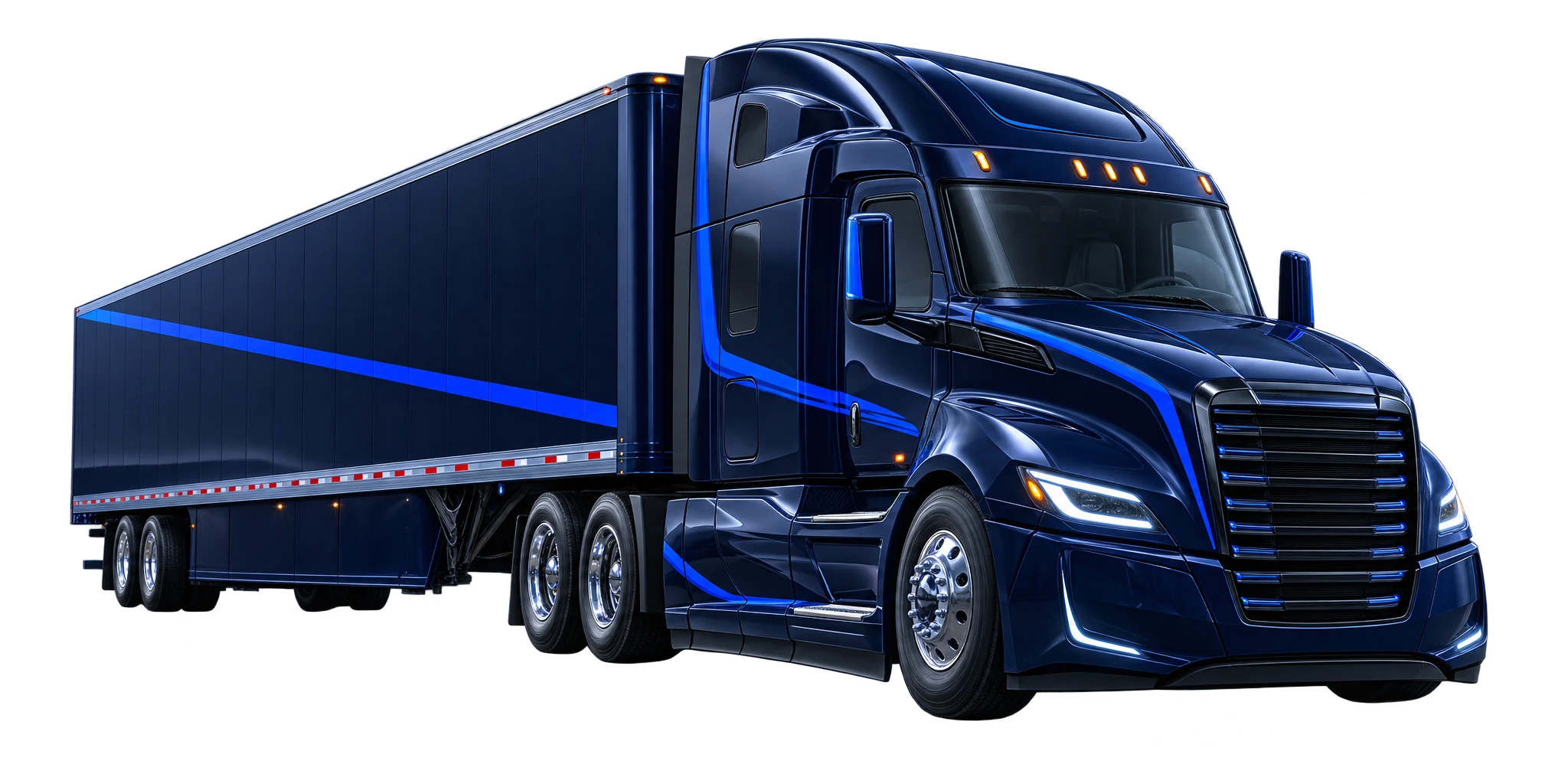
Published rules of thumb, useful for deciding which quotes to request rather than for predicting the price:
- A few pallets: start with LTL. A 53 ft trailer carries about 26 standard pallets single-stacked (C.H. Robinson), so a full truck for two or three pallets means paying for a trailer that is mostly empty. Price a direct truck only if the freight is fragile, high-value or tied to a hard date.
- Around 6 to 12 pallets: quote more than one mode. This is the range where carriers start offering volume LTL (below), and where some shipments are better served by a partial or a full truck. Which one is cheapest depends on the lane and the week.
- About 12 pallets or roughly 15,000 lb and up: this is where C.H. Robinson says a shipment is usually considered truckload. Still compare, but expect full truckload to be the default quote.
Those counts assume standard 48x40 footprints. Oversized or non-standard pallets take up more floor space per unit, so a shipment can fill a trailer's floor well before it reaches the weight limit — check which footprints use space fastest before you count positions.
Two things bend those lines. Freight class affects LTL but not truckload: light, bulky or awkward freight tends to class higher, which raises its LTL price and can make a direct truck competitive at a lower pallet count. And lane balance affects truckload pricing. DAT describes a headhaul market as one where shippers' demand for trucks on a lane is greater than carriers' supply, which pushes the outbound rate up; in a backhaul market there are more trucks than loads, and "shippers have pricing power because carriers are willing to negotiate a price to exit the market." So the same shipment can price very differently depending on which direction it runs.
Transit time and handling
A full truckload runs direct from pickup to delivery, so its transit time is mostly a function of distance and the driver's available hours. A standard LTL shipment moves through terminals, and each cross-dock and linehaul connection is a step that has to line up, so its transit time depends on the carrier's network and schedule for that lane. Compare the transit times each carrier quotes for your specific lane and service rather than assuming a fixed gap between the modes.
If the date matters, look at what the LTL service actually commits to. Standard LTL transit times are published estimates, but some carriers sell guaranteed and time-specific options on top. Old Dominion, for example, offers a Guaranteed Service in which a shipment "will deliver within normal transit times by 5pm or your freight charges revert to standard LTL rates," and an On Demand Service for time-specific delivery outside its normal transit times. A dated commitment can ride either mode; what matters is the written terms of the service you buy.
The quieter cost is handling. Every cross-dock is a forklift picking your pallet up, moving it, and setting it down next to other shippers' freight. Most freight arrives fine, but each transfer is another chance for a fork through a carton, a pallet set down hard, or a box crushed under someone else's load. That is why our palletizing guide exists: LTL freight has to be packaged for the network, not just the road.
FTL freight is loaded once and unloaded once. For fragile, high-value or hard-to-replace freight, fewer handling events can justify the truck on their own.
The middle ground: volume LTL and partial truckload
Between the two sits a useful pair of hybrids. Volume LTL covers shipments that fall outside normal LTL parameters but are not large enough for a full truckload. Intek Logistics lists the usual qualifiers as a minimum of 5,000 lb, six or more pallets, or 12 to 32 linear feet of trailer space, and notes that volume rates are spot quotes priced on the trailer space used rather than on NMFC freight class.
Partial truckload is for freight that is too large for standard LTL efficiency but does not need a whole trailer. BlueGrace describes it as a 6-to-18-pallet option that typically involves "fewer stops, less rehandling, and reduced exposure to cross-docking" than a standard LTL network. On the right shipment that puts it between the two modes on both price and handling. Availability depends on finding a carrier with the right space on the lane, so it is worth asking for alongside the other quotes rather than counting on it.
The four options side by side, using the figures cited above:
| Option | Size where it is usually quoted | How it is priced |
|---|---|---|
| LTL | A few pallets, up to about 12 pallets or roughly 15,000 lb (C.H. Robinson) | Your share of a shared trailer: pallet count, weight, freight class and accessorials |
| Volume LTL | A minimum of 5,000 lb, six or more pallets, or 12 to 32 linear feet (Intek Logistics) | Spot quote on the trailer space used rather than NMFC freight class |
| Partial truckload | 6 to 18 pallets (BlueGrace) | Between LTL and a full truck, when a carrier has space on the lane |
| FTL | About 12 pallets or 15,000 lb and up; a 53 ft trailer carries about 26 standard pallets single-stacked (C.H. Robinson) | The whole truck for the lane, regardless of freight class |
When to pay for the truck even if LTL is cheaper
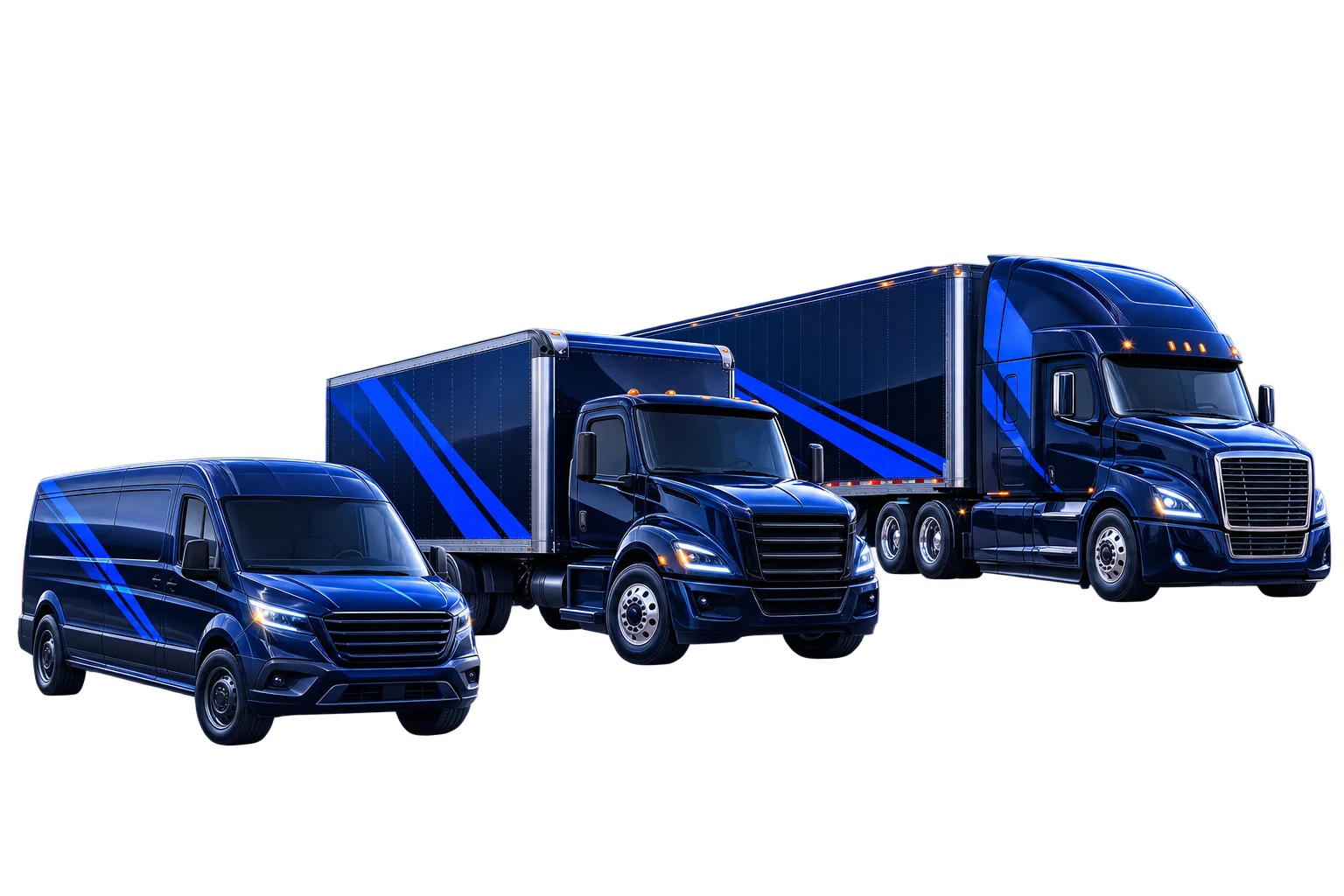
Cheapest per pound is not always cheapest overall. A direct truck is worth pricing when:
- The deadline is real. A store opening, an installation crew on the clock, a production line waiting. Standard, non-guaranteed LTL is fine for restocking a warehouse; for a dated commitment, either buy a service with written time terms or price a direct truck, and compare the two.
- The freight can't take handling. Glass, stone, calibrated equipment, finished furniture. A single damaged unit can cost more than the price difference between the two modes.
- The value is concentrated. Freightquote's terms state that LTL cargo liability "varies by carrier, commodity, and the product being considered new or used" and "is generally limited to a per pound amount," while truckload liability is capped at the disclosed value or $100,000, whichever is less. Neither mode automatically covers full value — our freight insurance guide covers when to buy coverage on top.
The decision checklist
- Count honestly: pallet positions after packaging, total weight, stackability.
- A few pallets: start with LTL, unless the freight is fragile, high-value or dated — then also price a partial or a direct truck.
- Around 6–12 pallets: quote LTL, volume LTL and a full truck side by side, and let the lane decide.
- About 12 pallets or 15,000 lb and up: expect a full truckload quote to be the starting point, and still check it against volume LTL.
- Any count with a hard date: read the service terms. Compare a guaranteed or time-specific LTL service with a direct truck before booking.
- Recurring lane? Send the lane list rather than quoting shipment by shipment; where volume supports it, route density can lower the cost per delivery.
One caveat the checklist cannot carry: a 53 ft trailer needs room to turn, back in, and sit while it unloads. If either end is a tight lot, a residential street, or a storefront with no dock, what equipment your site can actually take may rule a mode out before pallet count comes into it.
This is also where a dual-authority operation is useful: because DirectXpress holds both broker and motor carrier authority, the same quote request can come back priced as nationwide LTL through partner carriers or as a dedicated truck, whichever fits the freight. Tell us the pallet count, the weight, and the date it must arrive, and we will price your actual lane.
FAQ: LTL vs. FTL
How many pallets before FTL is cheaper than LTL?
There is no fixed number. A common rule of thumb, cited by C.H. Robinson, treats about 12 pallets or roughly 15,000 lb as the point where a shipment is usually considered truckload. From about six pallets up, quote LTL, volume LTL and a full truck side by side, because freight class and the lane decide which comes out cheaper.
Is FTL always faster than LTL?
Not always. A full truck runs direct with no terminal stops, which removes the network connections that shape standard LTL transit. But some LTL carriers sell guaranteed and time-specific services, so the real comparison is the transit time and delivery terms each carrier quotes for your lane.
What is partial truckload, and when does it make sense?
Partial truckload is for shipments too large for standard LTL but short of a full trailer. BlueGrace describes it as a 6-to-18-pallet option with fewer stops and less rehandling than a standard LTL network. It suits freight that should be handled less without paying for a whole truck, when a carrier has space on the lane.
Does freight class matter for FTL?
No. Class is an LTL pricing mechanism; a full truckload prices the whole trailer for the lane regardless of what is in it. That is one reason light, bulky freight that classes high in LTL can sometimes cost less to ship on a direct truck at a lower pallet count than you might expect.
Is LTL riskier for damage?
LTL involves more handling: each terminal transfer means the pallet is lifted and moved again, whereas a full truck is loaded once and unloaded once. Good palletizing helps protect durable freight in the network; for fragile freight, price a partial or a direct truck.
Can I mix LTL and FTL in one freight program?
Yes. If your volume varies, LTL can carry the smaller shipments, a full truck or partial the larger ones, and a dedicated route can make sense once a lane becomes steady. Sending the whole lane list lets a carrier price the mix as a program and show where route density could lower your cost per delivery.
About the author
DirectXpress Dispatch
Dispatch and Operations, DirectXpress
The dispatch team at DirectXpress, an Ontario, CA freight company holding both broker and motor carrier authority (MC 1801477 / USDOT 4539992). Same-day LA County freight, heavy final mile for 150-1,500 lb shipments, and nationwide LTL.