
A Pallet Is Coming to Your House: What to Expect
What was actually booked, the call before delivery, how to inspect and note damage before you sign, and how to prepare for freight at home.
A pallet delivery to a house goes smoothly when you know three things before the truck arrives: exactly which delivery services were booked on your shipment, when the carrier will contact you to arrange delivery, and how to check and document the freight before you sign. Get those right and freight day is usually uneventful.
Confusion about where the pallet will end up is a common source of frustration with a first freight delivery, and so are missed calls and rushed signatures. This page covers all three, plus what to ask the carrier about the truck and the street in front of your house.
What was booked decides where the pallet ends up
Freight is not delivered on one universal standard. Residential delivery, liftgate service, inside delivery and delivery appointments are separate services on a freight bill, and each carrier defines them in its own rules tariff. One national LTL carrier, FedEx Freight, lists them as separate items with separate charges: a residential delivery charge, liftgate service, inside pickup or delivery, and notification before delivery (FedEx Freight 100 Series Rules Tariff).
The details inside those services vary too. That same tariff says its residential deliveries are made "to the front door, back door, or inside the garage," that residential service "does not include packing, unpacking, assembling, setup, or removal of debris," and that inside delivery is performed when requested and "Carrier's operating conditions permit," with floors above or below the truck's level served only when an elevator is available. It also says the carrier is not obligated to provide liftgate service when a suitably equipped vehicle is not available, and that service is only rendered at locations "safe and accessible to the vehicle." Another carrier's tariff, or a retailer's own delivery terms, can say something different.
So before delivery day, find out from the seller or the carrier exactly what is on your order: is a liftgate booked, is delivery to the curb, the door, the garage or inside, does it include stairs, and does anyone unpack, assemble or take away packaging? Some retailers use names like "curbside," "threshold" or "white glove," but those are marketing labels, and what each includes is set by the company selling it. Get the scope in writing if you can. (How the equipment side works is covered on our liftgate delivery page, which is written for the person booking the shipment; this page is for the person receiving it.)
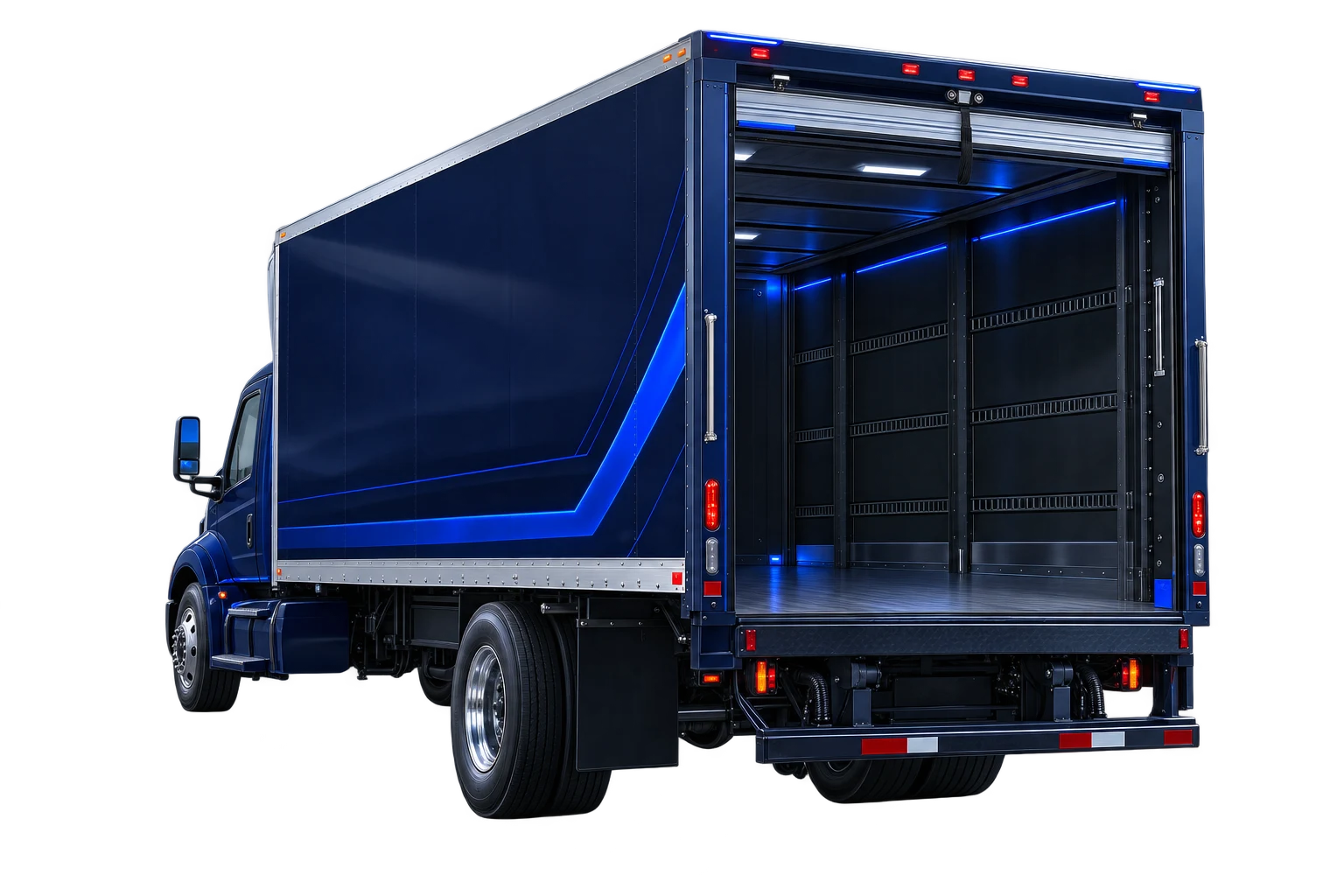
The call before delivery, and why to answer it
Many residential freight deliveries are arranged by phone or message before the truck is sent, and your phone number on the shipping paperwork is how the carrier reaches you. FedEx Freight's tariff, for example, says its residential charge includes an initial notification to make delivery arrangements only if the carrier has been given the consignee's correct phone number. Make sure the seller has your current number, and answer unfamiliar numbers in the days before delivery.
The window you are offered depends on the carrier and the route, so ask how long it is and whether you will get a call when the truck is close. If a delivery attempt fails because nobody can receive it, carriers can charge for another attempt: the FedEx Freight tariff lists a redelivery charge for each additional tender of delivery when delivery "through no fault of Carrier" cannot be made. Other carriers set their own terms, so ask what applies to yours. Two things are worth raising on that call:
- Describe the access honestly. Narrow road, steep driveway, low branches, a gate, HOA rules about trucks, parking only on the street: each of these can affect which vehicle and equipment are suitable. Whether a given truck can reach your door and turn around depends on the actual street, so let the carrier assess it.
- Ask what vehicle is coming. If you are unsure your street can take it, ask now whether a smaller vehicle or a different arrangement is possible. Do not assume a substitute is available; confirm it before delivery day.
Before you sign: inspect, count and write it down
The delivery receipt is where visible damage and shortages are recorded. FedEx Freight's guide to loss and damage claims tells recipients that they "must carefully identify and document loss and/or damage on the delivery receipt at time of delivery," and that a shortage should be noted on the receipt "before signing for the shipment" (FedEx Freight loss and damage guide). Before you sign:
- Walk around the pallet. Look for crushed corners, torn stretch wrap, punctures, tilting, or signs the pallet was rebuilt.
- Count the pieces against the delivery receipt, and note any shortage on it.
- Write specifics on the receipt. The FedEx guide asks for specific detail rather than generic terms like "box damaged," gives "2 of 12 bottles #12345 hand soap damaged in 1 carton" as an example of proper notation, and states that "subject to inspection," by itself, "is not considered a valid notation of loss or damage."
- Photograph the pallet, any damage and the signed receipt before the truck leaves, so you have your own record.
A clean signature is a record of what could be seen at delivery, not the end of your options. Damage that was not apparent at the time of delivery is called concealed damage, and the FedEx guide says such claims "will be handled based on their individual merits." It quotes the National Motor Freight Classification rule that concealed damage must be reported to the delivering carrier "upon discovery" with a request for inspection, and says concealed damage "should be reported to the carrier within 15 days of delivery." The same guide gives nine months from delivery to file a formal claim under its bill of lading terms. Those are FedEx Freight's terms; your carrier's may differ, so unpack and check the contents promptly, and report anything wrong to the seller and the carrier as soon as you find it.
How long a driver will wait while you inspect is not unlimited. Carriers commonly set free time at a stop before detention charges begin; FedEx Freight's tariff, for example, allows 15 minutes of free time for a stop under 1,000 pounds. Ask your carrier what applies, and be ready to inspect when the truck arrives.

Why it doesn't track like a parcel
Freight tracking often looks different from a small-parcel map. A pallet moving by LTL usually travels between terminals, and tracking may update at scans along the way rather than continuously, depending on the carrier. Transit estimates can move, so treat the delivery arrangement you agree with the carrier as the date to plan around, and ask the carrier directly if the estimate changes. Some carriers offer live status and delivery photos; DirectXpress attaches photos, signatures and notes to every order.
Getting ready so the window goes smoothly
- Clear the delivery area: cars off the driveway apron, bins moved, gate open, pets inside.
- Plan the move from where the pallet lands. If your delivery ends at the curb or the garage door, you are responsible for the rest. Check the weight on the order and plan equipment rated for it, enough capable help, and a route without steps or soft ground where possible. If you cannot move the item safely, arrange a delivery service that includes placement before the shipment is booked. (Buying the freight service yourself instead? Our 150–1,500 lb shipping guide maps the options.)
- Plan for weather. Cardboard and rain do not mix; have a tarp or a covered spot ready for anything that will sit outside.
- Keep the packaging until you have unpacked and checked everything. If you find concealed damage, the carrier may want to inspect it, and for goods claimed as a total loss the FedEx guide requires the damaged merchandise to be kept as salvage until payment is made or the carrier advises otherwise.
What good looks like from the carrier's side
A residential delivery done well is predictable: an agreed delivery window, a call when the truck is close, equipment suited to the street, a driver who gives you time to check the freight, and a delivery record everyone can look at later. At DirectXpress, heavy residential final mile for 150–1,500 lb shipments is built around appointment scheduling, delivery windows and access planning, and photos, signatures and notes are attached to every order. Liftgate, appointment and inside placement are priced into a quote when they are selected. Standard lanes price instantly; lanes that need a human look get a reply from dispatch, typically within one business hour.
For the service itself, see our final mile delivery service page.
FAQ: Receiving a pallet at home
Will the delivery driver bring the pallet into my garage?
It depends on the services booked and the carrier's own terms. Some carriers deliver residential freight to the door or garage; others, or some retailer delivery options, stop at the curb. Inside delivery is usually a separate service. Ask the seller or carrier exactly where your delivery ends before delivery day.
What if I'm not home during the delivery window?
Ask the carrier whether a signature is required and whether someone else can sign for you. If the window will not work, contact the carrier before it starts to rearrange delivery. A failed attempt can lead to a redelivery charge and a later delivery date, depending on the carrier's terms.
Should I refuse a damaged pallet?
There is no single right answer. It depends on the damage, the goods and the seller's return and replacement terms. If you see damage, write specific notes on the delivery receipt, take photos, and contact the seller or carrier for instructions before deciding. Refusing freight can affect how the seller handles a return or replacement, so ask first if you can.
What does it mean that damage must be "noted at delivery"?
The delivery receipt records the condition that could be seen when the freight arrived, so visible damage and shortages should be written there, specifically, before you sign. Damage you find later is concealed damage; report it to the carrier and the seller as soon as you discover it. FedEx Freight, for example, asks for concealed damage to be reported within 15 days of delivery and handles such claims on their individual merits.
Can a full-size semi reach my street?
Not always. It depends on the street, turning room, overhead clearance and local rules. Describe the access when the carrier contacts you and ask what vehicle is coming; if you are unsure it fits, ask whether a smaller vehicle or another arrangement is possible and confirm it before delivery day.
Who moves the empty pallet afterward?
Unless your delivery service includes debris removal, expect the pallet and packaging to stay with you. Ask the carrier or seller if they take pallets back. For disposal, check your city's bulky-item or recycling rules.
About the author
DirectXpress Dispatch
Dispatch and Operations, DirectXpress
The dispatch team at DirectXpress, an Ontario, CA freight company holding both broker and motor carrier authority (MC 1801477 / USDOT 4539992). Same-day LA County freight, heavy final mile for 150-1,500 lb shipments, and nationwide LTL.