Short Answer: What You're Really Shopping For
When someone searches "freight carrier companies," they usually want one of two things: a company that will physically move a pallet, or a company that will find someone to move it. Those are different businesses with different legal duties. A motor carrier owns or operates the trucks and holds the operating authority to haul freight. A freight broker arranges the move and hires a carrier to do it. Some companies, DirectXpress included, hold both kinds of authority, so it matters which hat is on for your shipment.
Here's the quick version of how to vet either one:
- Look up their federal registration. A carrier needs a USDOT number and active operating authority. A broker needs active broker authority.
- Ask for proof of insurance. Get a certificate that names the coverage and the dates.
- Match the carrier to your freight. A national LTL network and a local truck fleet solve different problems at 150 to 1,500 lb.
- Get the accessorials in writing. Liftgate, appointment and inside delivery change both the truck and the invoice.
The rest of this guide walks through each check in the order you'd actually do them. If you want the plain-English definitions first, our post on the difference between a freight broker and a motor carrier covers the roles in more depth.
One note on scope. This guide is written for pallet-sized freight: crates, machinery, furniture, wholesale stock, anything too heavy for a parcel service and too small to justify a full truck. If you're moving a full 53-foot load, or a household move, the vetting rules differ and household movers face extra federal rules we don't cover here.
Step One: Check Their Federal Authority
This takes about five minutes and screens out most of the problems. The Federal Motor Carrier Safety Administration (FMCSA) keeps a public record of every interstate carrier and broker. You can search it by company name or USDOT number through the FMCSA company snapshot, and check insurance filings through the agency's licensing and insurance lookup.
What to look for in the record
- Operating status. It should read "Authorized for Property" for a carrier. Anything marked out of service, inactive or revoked is a stop.
- Entity type. The record tells you whether the company is registered as a carrier, a broker, or both. If a company calls itself a carrier but is only registered as a broker, it's subcontracting your freight.
- Legal name versus trade name. Many companies operate under a brand name that differs from the registered legal name. Ask for the legal name and USDOT number and compare them to the record.
- Years of authority. A brand-new authority isn't automatically bad, but pair it with the insurance check below.
- Address and phone. They should match what's on the company's website and quote.
Why the legal name matters
Brand names collide. We field this ourselves: people regularly confuse DirectXpress with the federal benefits card, which is why we wrote a short post on whether DirectXpress is the same as Direct Express. Looking up the USDOT number rather than the marketing name removes that guesswork for any carrier you're considering.
If a company can't give you a USDOT number, or gives one that doesn't match the name on your quote, treat that as your answer and move on.
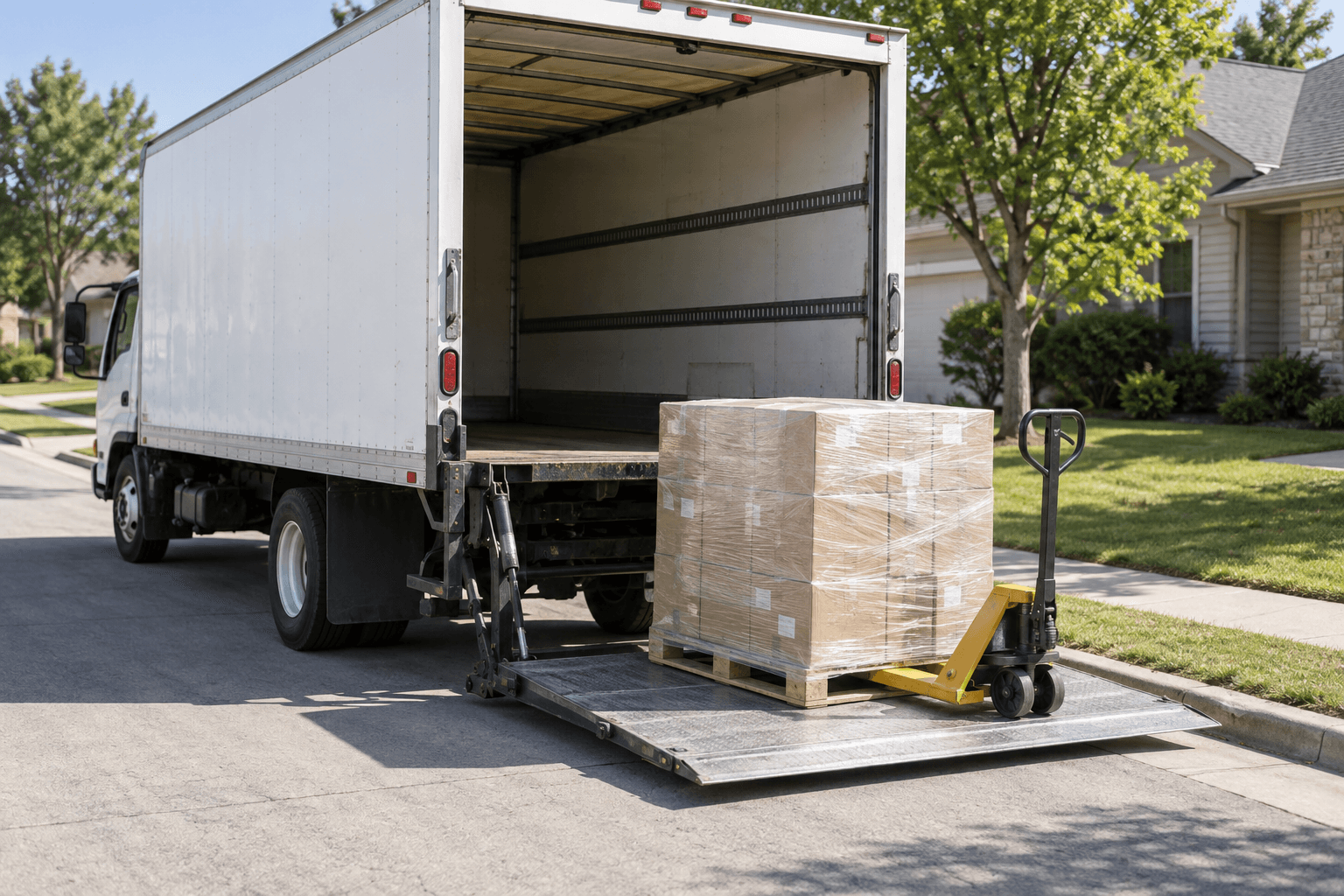
A box truck with a liftgate can reach addresses a 53-foot trailer can't.
Step Two: Ask for Proof of Insurance
Authority tells you a company is allowed to haul freight. Insurance tells you what happens if something goes wrong. Ask for a certificate of insurance before you book, and read what it actually says.
The numbers worth knowing
Federal rules set a minimum public liability requirement for carriers hauling general freight in vehicles over 10,001 lb. That requirement is $750,000, and it covers injury and property damage to other people on the road. It doesn't cover your pallet. Cargo insurance, which does, isn't federally required for general freight, so carriers choose their own limits. Brokers, for their part, must hold a $75,000 surety bond or trust fund on file with the FMCSA.
That gap is the part shippers miss. A carrier can be fully legal and still pay out very little on a damaged pallet, because liability for lost or damaged freight is often set by the carrier's own terms, frequently by the pound. We walk through this in Freight Insurance vs. Carrier Liability, including why an $8,000 machine can carry only $800 of default protection.
What to ask for
- A certificate with your cargo limit and dates. Check that the policy is current on your ship date.
- The per-shipment limit and the deductible. A high headline limit with a large deductible still leaves you exposed.
- Exclusions. Many policies exclude specific commodities, such as electronics, glass or machinery, or require special packing.
- Brokers: who carries the cargo claim. Ask which carrier will haul your load, and whether the broker holds contingent cargo coverage.
If the declared value of your freight is higher than the carrier's liability limit, buy additional coverage or declare the value in writing on the bill of lading. Don't assume it's covered.
Step Three: Local Carrier or National LTL Network?
For a pallet between 150 and 1,500 lb, you usually have two realistic choices, and they solve different problems.
When a national LTL network fits
A national LTL carrier moves your pallet through terminals: pickup truck, origin terminal, linehaul, destination terminal, delivery truck. It's built for long distances and for freight that ships on a standard freight class. The tradeoffs are handling at each terminal (more touches mean more chances for damage), transit windows measured in days, and delivery appointments that can be broad. If you're unsure whether a full truck would be cheaper, see our breakdown of LTL vs. FTL.
When a local carrier fits better
A local carrier with its own trucks picks up and delivers on one vehicle, with no terminal in between. That tends to win when:
- The freight is going within the same metro area or region, such as Inland Empire to Los Angeles or Orange County.
- You need same-day or next-day delivery.
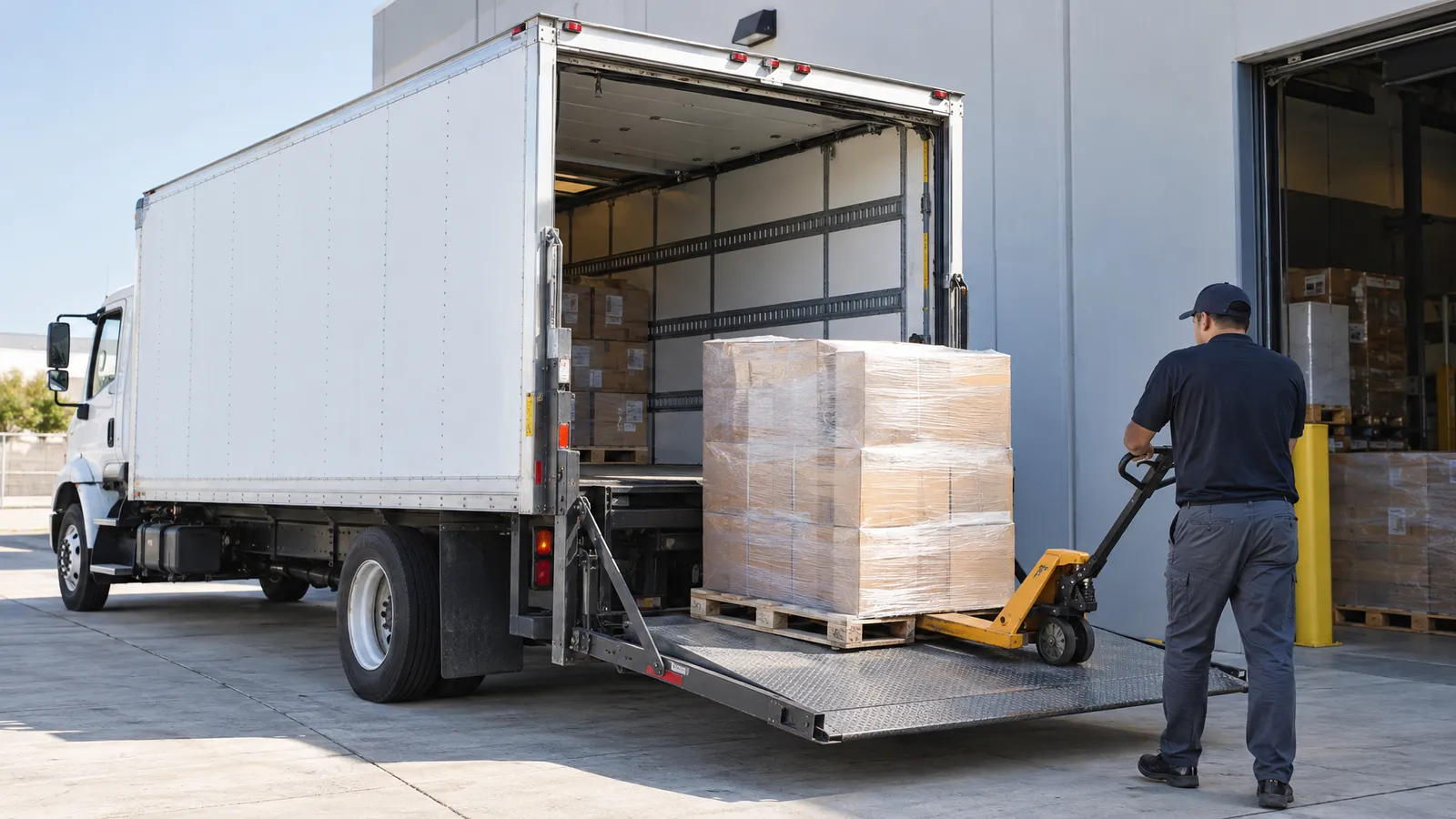
- The delivery needs a liftgate, a fixed appointment, or inside placement.
- The destination is a residence, a store, a job site or a dock-less building that a 53-foot trailer can't reach.
- The freight is fragile or high-value and you want fewer touches.
Our guide to shipping 150-1,500 lb freight compares LTL, final mile, same-day service and load boards side by side if you're weighing all four.
The hybrid option
Some companies, including DirectXpress, run their own trucks locally and use vetted partner carriers for long-haul LTL. The benefit is one quote and one point of contact, whichever way your freight moves. The thing to check is whether the company is clear about which loads it hauls itself and which it hands to a partner.
Questions to Ask Before You Book
Once a carrier passes the authority and insurance checks, a short phone call or email exchange tells you a lot about how the shipment will go. These questions work for a broker or a carrier.
- "Will your own truck haul this, or will you hand it to another carrier?" Either answer is fine. A vague answer isn't.
- "What does the quote include?" Ask specifically about liftgate, appointment, inside delivery, residential surcharges and waiting time. Our post on accessorial charges lists the common ones, and what a freight quote actually prices shows how the base number is built.
- "What's your pickup and delivery window?" A window of two hours is different from "sometime Tuesday."
- "How will I know where it is?" Look for tracking, status updates and a named contact, not just a phone number.
- "What proof of delivery do you provide?" A bare signature leaves a damage claim open. Photos at the dock and notes on the delivery receipt matter, and we cover that in Proof of Delivery That Actually Settles a Dispute.
- "What's the process if something is damaged?" Ask how claims are filed, how long you have to file, and who handles it.
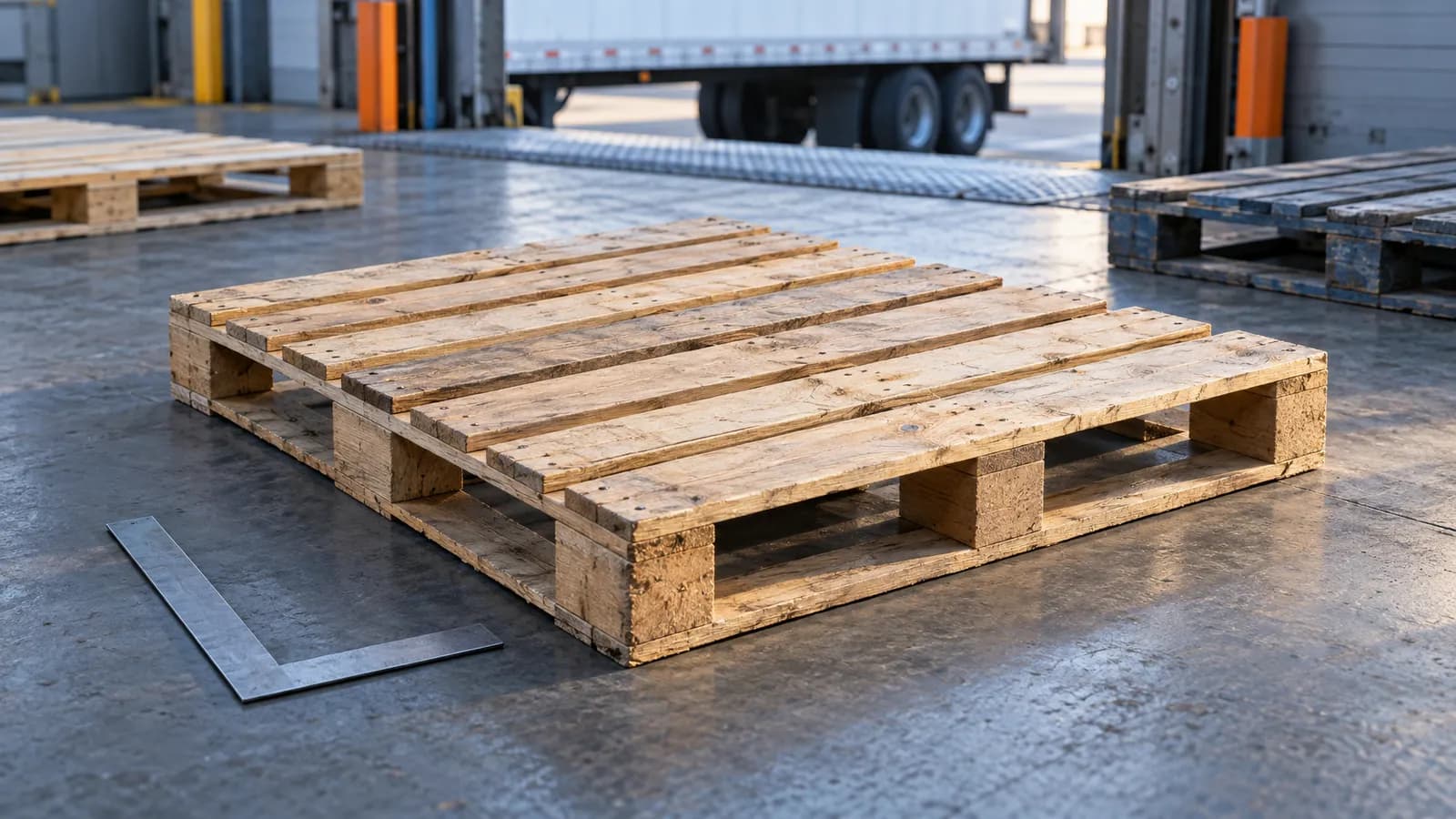
Give them accurate details in return. The most common cause of a bill that's higher than the quote is a shipment described wrong: weight, pallet dimensions, number of pieces, or a delivery address that turns out to be residential. Measure the loaded pallet, not the empty one, and say whether the destination has a dock. If you haven't palletized yet, How to Palletize a Shipment That Survives the Trip shows how to build one that holds up.

Five minutes of paperwork checks before booking saves most carrier headaches.
Red Flags That Should Slow You Down
Most carriers and brokers are legitimate. The ones that aren't tend to share a few habits. If you see two or more of these, pause before you pay anything.
- The price is far below every other quote. A quote that's much lower than the rest usually means accessorials were left out, or the load will be re-brokered at a higher cost and then dropped when no one takes it.
- No USDOT number, or a number that doesn't match the name. Check it yourself rather than trusting a PDF.
- Pressure to pay by wire or gift card, or to pay in full upfront. Freight is normally billed on a standard invoice or card terms.
- A brand-new website with no address. A real carrier lists a physical location, and you can look it up on a map.
- Refusal to name the carrier who'll haul your freight. A broker can reasonably keep its carrier list private until booking, but you should know who is on the truck by pickup day.
- Vague terms on damage. If nobody can tell you the liability limit or the claim deadline, assume it's lower than you'd like.
Double-brokering and identity theft
Two scams are worth naming because they hit small shippers. In double-brokering, a broker hands your load to a second broker who passes it on again, and the party who finally picks it up isn't who you vetted. In identity theft, someone uses a real carrier's USDOT number with a different phone number or email. Both are easiest to catch at pickup: ask the driver for the company name on the door and the USDOT number, and compare them to your booking confirmation before the pallet leaves. A legitimate dispatcher won't mind the question.
When you do hit a problem, document it fast. Photograph the pallet at pickup and delivery, write any damage on the delivery receipt before you sign, and keep every email.
How DirectXpress Fits (And When It Doesn't)
We'd rather you vet us the same way you'd vet anyone else, so here's what to check. DirectXpress is a hybrid company: we hold both freight-broker and motor-carrier authority. Our address is 3625 Jurupa Street, Ontario, CA 91761, and you can look up our registration with the FMCSA by legal name, Direct Xpress Enterprise Inc.
What we haul ourselves
Our own trucks cover local same-day freight and heavy final mile delivery across the Inland Empire, Los Angeles and Orange County. That includes liftgate, appointment and inside delivery for palletized, crated and oversized freight, with the core range at 150 to 1,500 lb. If you're sending a pallet from an Ontario warehouse to a store in Anaheim or a job site in Riverside, one truck picks it up and delivers it.
What partner carriers haul
For nationwide LTL, milk runs, dedicated routes and hot-shot moves, we work through vetted partner carriers. Tracking, proof of delivery and claims run through one platform, so you aren't chasing a second company. We'd tell you before booking whether a given load moves on our trucks or a partner's.
When we're not the right fit
If you're moving a household, shipping a parcel-sized box, or need a dedicated full truckload to the East Coast, other companies will serve you better. We publish no price list, because a quote depends on weight, dimensions, and the type of origin and destination. The fastest way to compare is to request a quote with your real pallet dimensions and delivery details, then hold it up next to the others using the questions above.
FAQ: Choosing a Freight Carrier
What is the difference between a freight carrier and a freight broker?
A freight carrier, formally a motor carrier, owns or operates the trucks and holds operating authority to haul freight. A freight broker arranges the shipment and hires a carrier to move it. Some companies hold both authorities. Check the FMCSA record to see which one a company is registered as.
How do I verify a freight carrier is legitimate?
Get the company's USDOT number and legal name, then search the FMCSA company snapshot. Confirm the authority is active, the entity type matches what they claim, and insurance is on file. Then ask for a certificate of insurance showing cargo coverage and dates.
How much insurance does a freight carrier need?
For general freight in vehicles over 10,001 lb, federal rules require $750,000 in public liability coverage. Cargo insurance isn't federally required for general freight, so limits vary by carrier. Brokers must hold a $75,000 surety bond. Ask for the cargo limit and deductible in writing.
Should I use a local carrier or a national LTL network?
For same-metro or regional deliveries, same-day timing, liftgate or appointment needs, a local carrier with its own trucks usually means fewer touches and tighter windows. A national LTL network is built for long-distance lanes on standard-class freight. Many shippers use both depending on the lane.
What should I check on a quote before I accept it?
Confirm the weight and dimensions, whether the destination is residential, and which accessorials are included, such as liftgate, appointment and inside delivery. Ask who hauls the load, the pickup and delivery window, and how proof of delivery and damage claims work.